
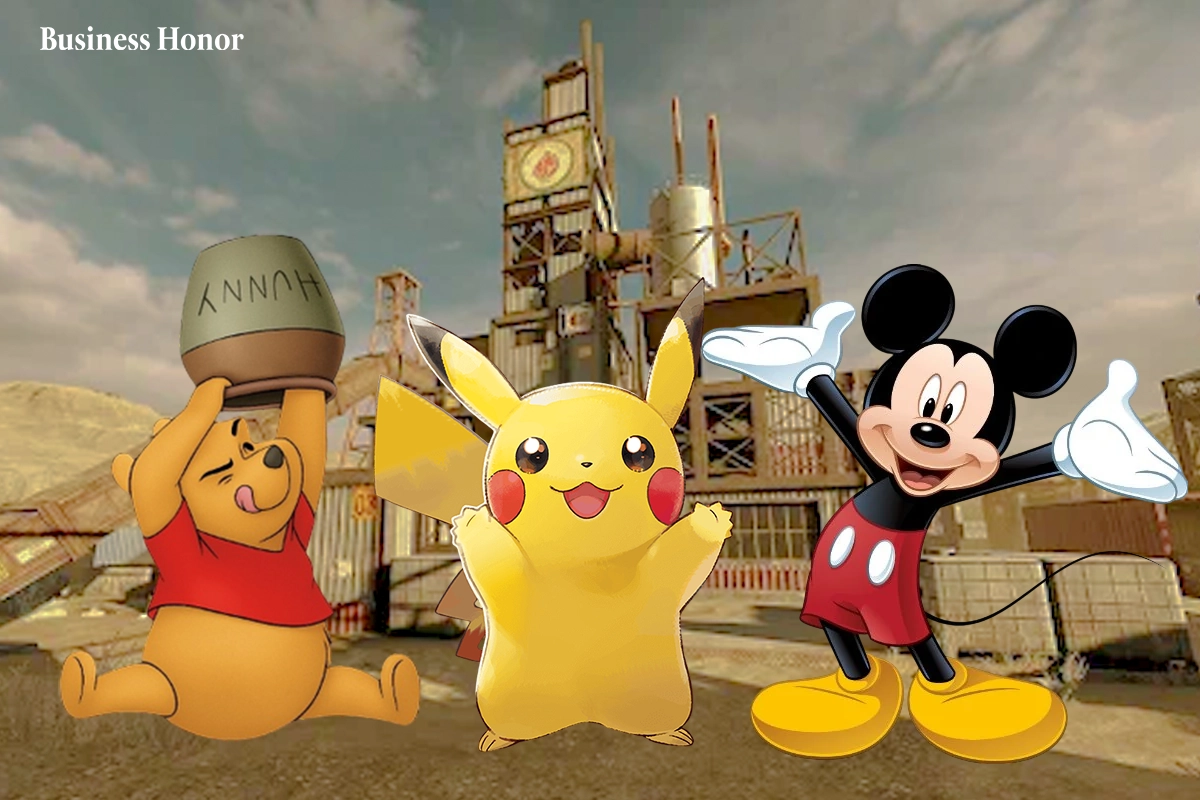
Look closely at the biggest entertainment franchises in the world, and one business truth jumps out right away: movie tickets rarely pay the bills. Opening-weekend box office numbers grab the headlines. Yet the real money in modern media comes from retail shelves, video game stores, and global licensing deals.
Streaming platforms are tightening their content budgets, and theater windows keep shrinking. Because of this, media executives and investors are putting their money into proven, multi-generational intellectual property (IP). Instead of taking risky bets on brand-new movies, major studios lean on established story worlds. These worlds bring in cash across toys, theme parks, games, and books all at the same time.
The Economics Behind Global Media Empires
To understand the top entertainment franchises worldwide, you have to look past the movie screen. Industry market reports and financial filings show a clear pattern. For legacy brands, consumer product licensing brings in 60% to 95% of all lifetime revenue.
Why do familiar characters beat brand-new movies on a company's balance sheet? It comes down to marketing costs and staying power. Launching an original film or video game takes huge upfront ad spending, and the payoff is never guaranteed. Older franchises already have built-in fans. Parents pass their childhood favorites down to their kids, creating a steady cycle of toy and apparel sales without needing a massive marketing push.
Former Walt Disney Company CEO Bob Iger put it simply when talking about the value of lasting stories:
"Great storytelling is the foundation of everything we do, and when you combine timeless characters with global distribution, you create value that endures across generations."
Top 10 Biggest Entertainment Franchises in the World
The table below ranks the top franchises using documented lifetime revenue across movie tickets, licensed merchandise, video games, books, and home video.
|
Rank |
Franchise |
Debut Year |
Est. Lifetime Revenue |
Primary Revenue Engine |
|
1 |
Pokémon |
1996 |
$130.7 Billion |
Licensed merchandise & trading cards |
|
2 |
Mickey Mouse & Friends |
1928 |
$61.2 Billion |
Global retail licensing & consumer goods |
|
3 |
Winnie-the-Pooh |
1924 |
$50.2 Billion |
Apparel, toys, & publishing licensing |
|
4 |
Star Wars |
1977 |
$46.7 Billion |
Toys, merchandise, & theatrical releases |
|
5 |
Disney Princess |
2000 |
$45.4 Billion |
Retail apparel, dolls, & licensing |
|
6 |
Call of Duty |
2003 |
$40.0 Billion |
Video game sales & live-service microtransactions |
|
7 |
Anpanman |
1973 |
$38.4 Billion |
Domestic Japanese retail merchandise |
|
8 |
Marvel Cinematic Universe |
2008 |
$37.5 Billion |
Global theatrical box office & home media |
|
9 |
Barbie |
1987* |
$36.3 Billion |
Doll sales, brand licensing, & film |
|
10 |
Wizarding World (Harry Potter) |
1997 |
$35.1 Billion |
Box office, global book sales, & theme parks |
Note: Mattel launched the Barbie doll in 1959, though media franchise tracking starts with its 1987 animated TV debut.
Detailed Profiles of the World’s Most Valuable IP
1. Pokémon
Parent / Rights Holders: The Pokémon Company (Nintendo, Game Freak, Creatures)
Market Impact: Pokémon leads Business Honor’s Top 10 Biggest Entertainment Franchises in the World. Pokémon started in 1996 as two Game Boy titles and grew into an unmatched retail powerhouse. Over $119 billion of its total revenue comes from licensed merchandise and the Pokémon Trading Card Game. It proves that an interactive, collectible hobby can easily out-earn traditional movies and TV shows.
2. Mickey Mouse & Friends
Parent / Rights Holder: The Walt Disney Company
Market Impact: Almost 100 years after Steamboat Willie hit screens, Mickey Mouse still anchors Disney’s consumer products business. The brand does not rely on new blockbuster movies to stay relevant. Instead, it brings in high-margin royalties from luxury fashion lines, home goods, and theme parks around the globe.
3. Winnie-the-Pooh
Parent / Rights Holder: The Walt Disney Company
Market Impact: Created by author A.A. Milne, Winnie-the-Pooh shows just how lucrative baby and toddler branding can be. Its warm, familiar style fits right onto baby clothes, plush toys, and nursery gear. That simple appeal has driven nearly $50 billion in retail sales alone.
4. Star Wars
Parent / Rights Holder: Lucasfilm (The Walt Disney Company)
Market Impact: Many analysts questioned Disney’s $4.05 billion purchase of Lucasfilm in 2012. Within ten years, ticket sales and merchandise paid that investment back several times over. Star Wars remains the gold standard for making money across movies, streaming shows, video games, and theme park attractions.
5. Disney Princess
Parent / Rights Holder: The Walt Disney Company
Market Impact: Former Disney Consumer Products executive Andy Mooney launched this franchise in 2000 through smart brand packaging. By grouping characters like Cinderella, Ariel, and Moana under one retail banner, Disney Princess built a $45 billion consumer goods machine.
6. Call of Duty
Parent / Rights Holder: Activision Blizzard (Microsoft)
Market Impact: Call of Duty stands out among the most popular entertainment franchises because it does not need toys or movies to make billions. Yearly game launches and in-game battle passes have brought in roughly $40 billion directly from players.
7. Anpanman
Parent / Rights Holder: Froebel-kan / TMS Entertainment
Market Impact: Few people outside Asia know Takashi Yanase’s superhero picture-book character, yet he is a household name in Japan. Almost all of Anpanman’s $38.4 billion in revenue comes from Japanese retail products. It shows that deep popularity in a single wealthy market can rival global media giants.
8. Marvel Cinematic Universe (MCU)
Parent / Rights Holder: Marvel Studios (The Walt Disney Company)
Market Impact: As the clear leader among the biggest film franchises of all time, the MCU changed how studios build connected movie universes. Even with solo heroes like Spider-Man tracked separately for merchandise, the shared film series has earned over $34 billion at the global box office alone.
9. Barbie
Parent / Rights Holder: Mattel
Market Impact Barbie’s recent surge proves that physical toys can successfully jump to the big screen. After decades of steady doll sales, Mattel’s 2023 live-action movie made over $1.4 billion worldwide. The film sparked fresh retail deals and turned a classic toy brand into a major box office draw.
10. Wizarding World (Harry Potter)
Parent / Rights Holder: Warner Bros. Discovery / J.K. Rowling
Market Impact: Very few modern franchises balance their income streams as evenly as Harry Potter. With over 600 million books sold, nearly $10 billion in ticket sales, hit games like Hogwarts Legacy, and dedicated theme park lands, the brand brings in steady cash from every direction.
Strategic Analysis: Risks, Regulation, and Market Shifts
For media leaders and investors, running a billion-dollar franchise takes more than creative talent. It requires smart asset management and strict legal protection. Industry financial data shows that major studios are under heavy pressure to squeeze higher profits from their existing libraries while dealing with shifting copyright rules.
How do legacy studios keep growing when audiences start feeling franchise fatigue? Pushing out too many sequels and spin-off shows can quickly wear out fans and hurt a brand's appeal. To avoid burning out viewers, studios are spacing out big releases and pairing them with video games to reach younger audiences.
Copyright laws also play a major role in what these brands are worth over time. Under rules like the U.S. Copyright Act, older versions of famous characters eventually enter the public domain. The original 1928 version of Mickey Mouse lost its copyright protection in 2024, for example. Companies have to keep updating character designs, enforcing trademarks, and registering new work with groups like the World Intellectual Property Organization (WIPO) to protect their earnings.
What part will artificial intelligence and user-generated platforms play in building the next big franchise? Games like Roblox and Fortnite now act as virtual malls where classic characters meet interactive play. This shift forces traditional studios to rethink how they license digital items.
The Future Outlook for Global Entertainment IP
Looking forward, Business Honor examines that the gap between mega-franchises and mid-budget original movies will likely grow even wider. Rising production and marketing costs push studios to invest in familiar worlds with reliable returns. At the same time, tech and gaming giants view major franchises as must-have anchors for their subscription services, which explains Microsoft’s $68.7 billion buyout of Activision Blizzard.
For executives and investors, the takeaway from the biggest entertainment franchises in the world is straightforward. Good storytelling lights the spark, but a smart business ecosystem builds the fortune. Companies that connect retail goods, video games, and global licensing around memorable characters will keep leading the media business for years to come.
FAQs:
What are the biggest entertainment franchises in the world?
Pokémon, Mickey Mouse & Friends, Winnie-the-Pooh, Star Wars, and Disney Princess rank as the biggest entertainment franchises in the world, each generating over $45 billion in lifetime revenue through global licensing and media sales.
Which franchise ranks first among the top entertainment franchises worldwide?
Pokémon holds the #1 spot among the top entertainment franchises worldwide with an estimated $130.7 billion in lifetime revenue, driven primarily by trading cards, licensed merchandise, and video games.
Why do merchandise sales drive the most popular entertainment franchises?
Retail merchandise generates year-round royalties across toys, apparel, and consumer goods, giving the most popular entertainment franchises higher, more consistent profit margins than short-term movie theater releases.
What are the biggest film franchises of all time at the global box office?
The Marvel Cinematic Universe (MCU) leads the biggest film franchises of all time with over $34 billion in ticket sales, followed by Star Wars and the Wizarding World.
Which media company owns the most top-grossing entertainment franchises?
The Walt Disney Company controls five of the ten highest-grossing entertainment franchises globally: Mickey Mouse & Friends, Winnie-the-Pooh, Star Wars, Disney Princess, and the Marvel Cinematic Universe.










































.webp)

.webp)



Comments
0 Comments