
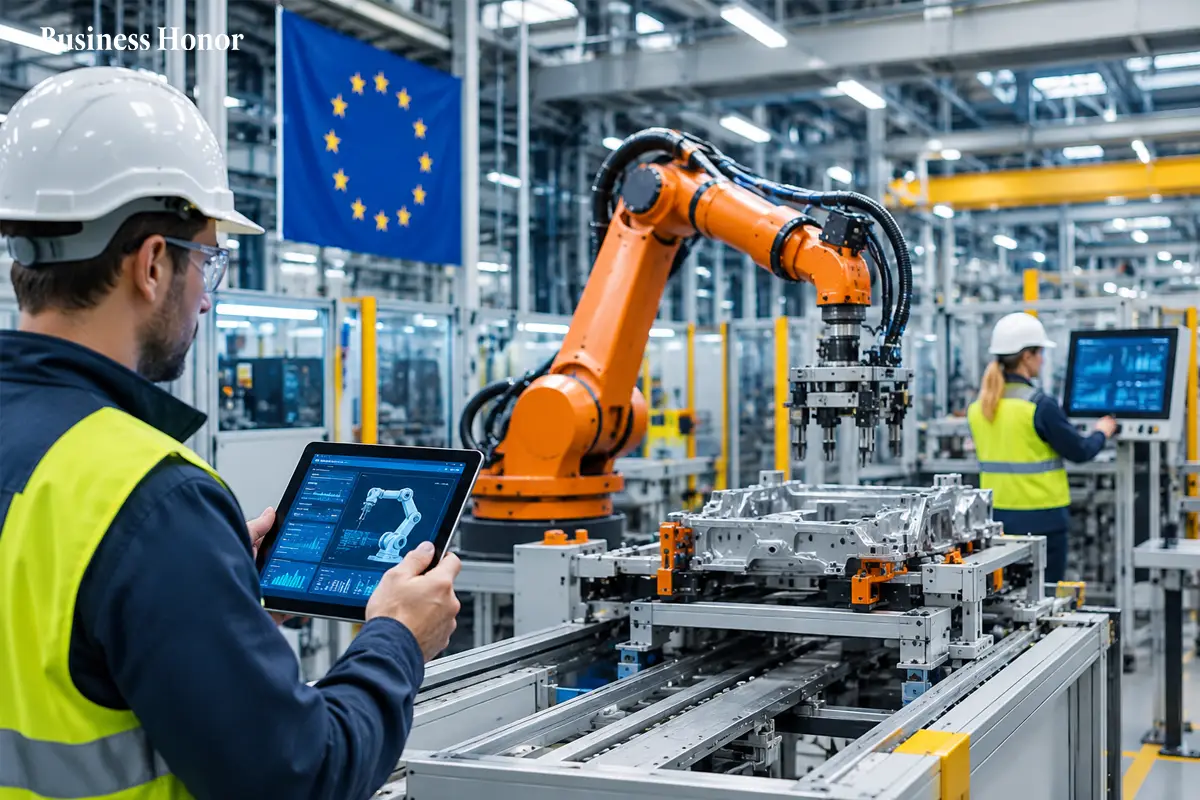
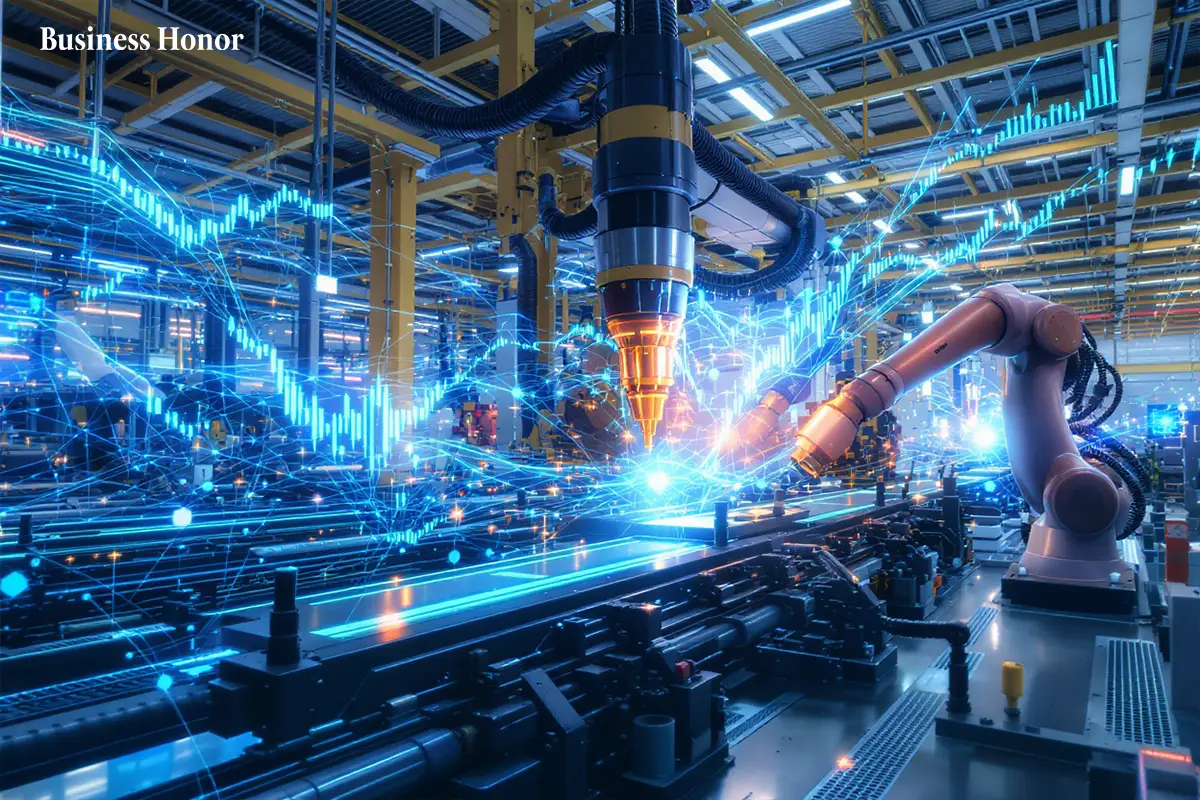
The most innovative manufacturing companies in Europe are entering a big new chapter in 2027. Artificial intelligence has moved off the computer screen and onto the factory floor. Factories and shipping hubs across Europe face worker shortages, high energy bills, and strict green rules. To stay ahead, they are building production lines that fix their own mistakes and warehouses that run almost entirely on their own.
For decades, European factories won business through heavy mechanical precision. Today, smart software, robots that can feel, and fast computer testing decide who comes out on top. Data shows that European companies are investing heavily in smart machines to boost output and deal with a shrinking workforce. At the same time, venture capital money is pouring into European factory tech as investors look for physical AI and reliable local supply chains.
With hundreds of global corporations and scrappy newcomers fighting for market share, which businesses are actually setting the pace? Here is a closer look at 10 companies leading the charge in 2027, spanning industrial titans, shipping leaders, and fast-growing manufacturing tech startups in Europe.
Europe’s Leading Manufacturing & Warehouse Innovators
|
Rank |
Company |
Headquarters |
Core Focus |
Key 2027 Innovation |
|
1 |
Siemens |
Munich, Germany |
Factory Automation & Software |
Digital twins and AI factory planning |
|
2 |
Exotec |
Croix, France |
Warehouse Robotics |
Skypod 3D rack-climbing storage robots |
|
3 |
PhysicsX |
London, UK |
Industrial AI & Testing |
Fast physics AI for rapid part design |
|
4 |
Bosch |
Gerlingen, Germany |
Smart Factories & Sensors |
Connected sensors and clean energy tracking |
|
5 |
Agile Robots |
Munich, Germany |
Touch-Sensitive Robotics |
Vision-guided assembly arms with a sense of touch |
|
6 |
DHL Supply Chain |
Bonn, Germany |
Contract Logistics & Shipping |
Smart wearables and helper warehouse robots |
|
7 |
ABB |
Zurich, Switzerland |
Factory Robotics & Power |
Self-routing mobile floor robots and cobots |
|
8 |
Scandit |
Zurich, Switzerland |
Computer Vision & Scanning |
Smartphone and AR warehouse barcode scanning |
|
9 |
Schneider Electric |
Rueil-Malmaison, France |
Power Management & Automation |
EcoStruxure smart energy and factory software |
|
10 |
Nomagic |
Warsaw, Poland |
Warehouse Picking AI |
Vision-guided robotic arms for online order packing |
Top 10 Innovative Manufacturing and Warehouse Companies in Europe for 2027
1. Siemens (Germany)
Based in Munich, Siemens sets the bar for innovative manufacturing companies in Europe, earning a top spot on Business Honor’s list of the Top 10 Innovative Manufacturing and Warehouse Companies in Europe for 2027. Heading into 2027, Siemens connects real factory floors with digital twins through its Xcelerator platform. Factory owners can build and test an entire production line on a computer before pouring any real concrete, helping car and airplane makers launch plants faster and waste far less energy.
"Industrial AI is an exceptional growth opportunity, and Siemens is built to win in this space." - Roland Busch, President and CEO of Siemens AG
2. Exotec (France)
Located in Croix, France, unicorn Exotec has changed how warehouses pack orders. Its Skypod system uses fast robots that climb storage racks up to 12 meters high, grabbing bins and bringing them straight to workers at packing stations. For retailers evaluating the best warehouse companies in Europe 2027, Exotec offers a clear advantage: brands like Uniqlo and Carrefour can install these robots inside older warehouses without shutting down daily shipping.
3. PhysicsX (United Kingdom)
Coming out of London as one of the top manufacturing tech startups in Europe, PhysicsX uses smart software to speed up how physical parts are designed. Traditional engineering relies on slow computer tests that take weeks to finish. PhysicsX trains its AI on real physics data, letting car, energy, and aerospace engineers test and improve turbine blades and battery cooling parts in seconds instead of months.
"Our customers can do 100,000 simulations in a day no problem." - Robin Tuluie, Co-Founder and Co-CEO of PhysicsX
4. Bosch (Germany)
Bosch pairs massive factory scale with smart software across its plants in Germany, Austria, and the Czech Republic. By placing smart sensors on shop floor machines, Bosch spots worn parts before they break down and balances power usage in real time. Since 2018, the company has cut its direct carbon emissions by over 80 percent, serving as a clear model for clean and profitable factory work.
5. Agile Robots (Germany)
Headquartered in Munich, Agile Robots builds robotic arms, mobile robots, and humanoid systems with full-body touch sensors and sharp computer vision. Standard factory robots handle heavy welding well, yet struggle with delicate jobs like plugging in tiny wires or assembling phones. Spun out of the German Aerospace Center (DLR), Agile Robots uses its AgileCore software to give machines a sense of touch, automating tricky assembly jobs across more than 20,000 deployed systems worldwide.
"We are making even more intensive use of AI to increase our productivity, and we are weighing up every investment even more carefully than before." - Stefan Hartung, CEO of Robert Bosch GmbH
6. DHL Supply Chain (Germany)
Operating out of Bonn, DHL Supply Chain leads European contract logistics through major investments in smart warehouses, wearables, and adaptive robotics. With digital tools deployed across over 95 percent of its global warehouses and more than 9,000 robots in operation, DHL pairs picking robots with live warehouse software to protect retail, automotive, and healthcare supply chains against sudden delays.
"Supply chain resilience has become a strategic differentiator." - Hendrik Venter, CEO of DHL Supply Chain
7. ABB (Switzerland)
Zurich-based ABB helps factories move away from stiff, old-school conveyor belts. By combining mobile floor robots with collaborative robotic arms, ABB lets factories build flexible production lines that route parts wherever they need to go. When customer demand shifts, plants using ABB gear can switch up production right away without expensive machine rebuilds.
8. Scandit (Switzerland)
Another standout Swiss unicorn, Scandit, turns regular smartphones, smart glasses, and robots into high-speed data scanners. Using computer vision and augmented reality, Scandit lets warehouse workers scan dozens of barcodes at once in dark aisles while highlighting where items go next. Replacing bulky handheld scanners with smartphone apps speeds up training and cuts down on packing errors.
9. Schneider Electric (France)
French giant Schneider Electric brings factory automation and power management together under one roof. Repeatedly praised by the World Economic Forum Global Lighthouse Network and ranked among Gartner’s top supply chain leaders, Schneider uses its EcoStruxure system to spot machine trouble early and track energy use, helping European factories prevent shutdowns and meet strict EU green targets.
"We electrify, automate, and digitalize every industry, business, and home, driving efficiency and sustainability for all." - Olivier Blum, CEO of Schneider Electric
10. Nomagic (Poland)
Representing Central Europe’s growing tech scene, Warsaw-based Nomagic builds smart pick-and-place robot stations for busy warehouses. Using deep learning and multi-angle cameras, Nomagic’s robotic arms grab, turn, and pack thousands of different items across clothing, makeup, and retail, solving one of the toughest manual bottlenecks in online order fulfillment.
"Our plans to transform warehouses with AI-powered robotics and automate repetitive, manual tasks are stronger than ever." - Kacper Nowicki, Co-Founder and CEO of Nomagic
Why European Industrial Innovators Are Reshaping Business in 2027
The rise of these 10 companies reflects a clear shift in how Europe competes. Because Europe cannot win on cheap labor or cheap energy, heavy automation and smart software have become its primary tools for growth.
Three core trends are driving this shift across the continent:
-
New Laws and Local Funding: Major policies like the EU Artificial Intelligence Act, the European Chips Act, and the EU Net-Zero Industry Act are channeling billions of euros into local clean tech, chip plants, and traceable supply chains.
-
Upgrading Older Warehouses: Building brand new warehouses in Western Europe is costly and slow, pushing executives toward modular robots from companies like Exotec and Nomagic that bolt straight into existing facilities.
-
Helping Workers Instead of Replacing Them: Guided by the European Commission’s Industry 5.0 Framework, modern plants use helper robots and smart glasses to support an aging workforce and make physical jobs safer.
Strategic Questions for Business Leaders and Investors
As capital flows into European factory tech, company leaders face tough choices:
-
Can older factories adopt AI robots fast enough to offset Europe’s shrinking workforce over the next five years?
-
Will European factory AI startups stay globally competitive while navigating stricter rules under the EU AI Act compared to rivals in the US and Asia?
-
Should shipping leaders buy autonomous warehouse robots upfront, or pay monthly through flexible Robot-as-a-Service contracts?
-
Is factory software, such as digital twins and warehouse control apps, becoming more valuable than the physical robots themselves?
The Leadership Advantage Heading Into 2027
As Business Honor highlights, watching the Best Advanced manufacturing companies in Europe shows leaders, founders, and investors exactly where business value is moving. Hardware does not alone guarantee strong profits. The companies winning big margins pair tough European machinery with smart AI, live sensor data, and easy-to-use software.
Tech investments in factories often fall short when leaders treat them as isolated side projects rather than rethinking how the whole operation works. The winners of 2027 will not just be the companies that buy the most robots—they will be the leaders who rebuild their factories and warehouses into flexible, data-driven operations ready for whatever comes next.
FAQ:
Which countries lead the innovative manufacturing companies in Europe?
Germany remains Europe’s biggest hub for factory automation, robotics, and industrial tech funding, followed closely by the United Kingdom, France, Switzerland, and fast-growing Central European hubs like Poland.
What makes the best advanced manufacturing companies in Europe stand out in 2027?
Top European manufacturers combine heavy machinery with physical AI, digital twins, and touch-sensitive robotics to cut energy waste, prevent downtime, and solve severe skilled-worker shortages.
What is driving demand for the best warehouse companies in Europe 2027?
Ongoing warehouse labor shortages, expensive urban real estate, and shopper demand for same-day delivery are pushing logistics leaders to deploy 3D cube storage, mobile robots, and AI vision picking.
How do manufacturing tech startups in Europe work with older factories?
Leading startups build modular robots, plug-and-play grippers, and lightweight software that connect directly into existing factory and warehouse systems without forcing costly plant shutdowns.
How do EU regulations impact factory and warehouse automation?
Laws like the EU Artificial Intelligence Act, European Chips Act, and EU Net-Zero Industry Act fund local clean-tech production and energy savings while setting clear safety rules for industrial AI tools.









































.webp)


.webp)



Comments
0 Comments