
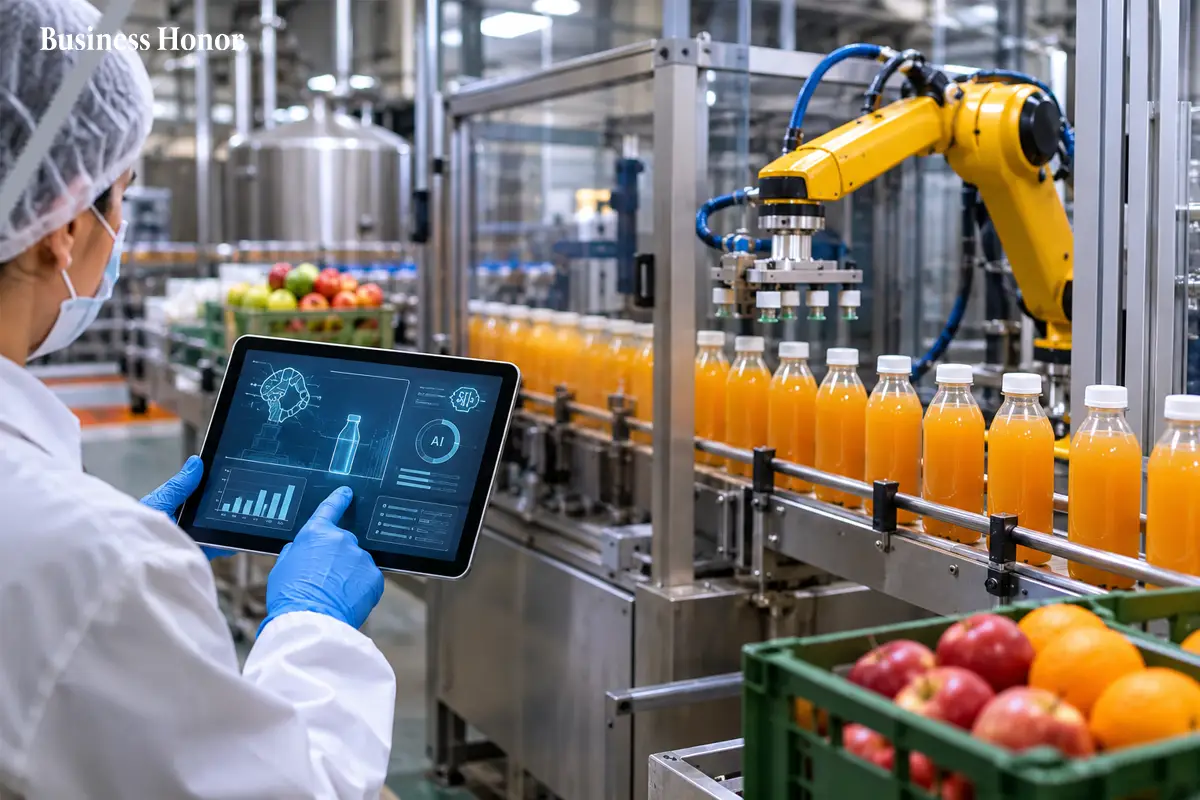
AI is reshaping the food and beverage industry, changing how manufacturers manage their daily operations. Food manufacturers are beginning to implement AI and automation technologies as well as digital solutions to improve everyday processes. This will help reduce food wastage, preserve quality and improve stock management. Businesses can also monitor the production and adapt to any changes in customer requirements. As more companies move towards digital solutions, AI is becoming an essential part of the food manufacturing and processing industry.
AI in food and beverage industry is also helping companies make better decisions about production and inventory. It can look back at sales data and understand what customers want to allow manufacturing companies to understand how much to produce and when they need to restock. AI can be used to monitor quality assurance, detect defects within the packaging and monitor storage. This can help companies reduce waste, manage their resources and ensure their products are high quality.
What are the applications of AI in food manufacturing?
Food manufacturers are using AI food technology to assess the quality of their products, monitor their processes and manage their stock. This helps manufacturers find issues with packaging, identify issues with equipment and reduce food wastage. Companies can also look into customer preferences to determine what is in demand and manufacture accordingly. All of this makes things easier to manage on a day to day basis, saves time and helps to keep costs down.
Why is AI important in the food and beverage industry?
Technology is used by food and drink companies to ensure that production runs smoothly, minimising waste. AI-powered food production helps manufacturers identify issues quickly, manage stocks and reduce any delays. It also helps them understand customer demand and make only what they need. This saves time and reduces costs.
How is AI reshaping the food and beverage industry?
The food and drink industry is taking advantage of using AI to improve day-to-day tasks within their business. Using AI in food manufacturing can help to increase monitoring of production, quality control and identify issues that may occur whilst making your product. AI can also help decrease food wastage, manage stock and keep track of the products available. This can improve planning in manufacturing and save time for businesses.
How AI can be used throughout the Food and Beverage Industry
1. Product Development
Companies within the food industry are using AI to create new recipes, flavour and food products. The AI can analyse the current recipes and combination of ingredients to give new ideas. It is also useful for developing plant-based foods. For example, Kraft Heinz have collaborated with NotCo to create plant-based foods that mimic the taste and texture of traditional dairy and meat products.
2. Supply Chain & Manufacturing
AI technology can be used in food manufacturing to improve production processes. By analysing previous data such as sales, weather and market trends companies can predict what their customers will want to buy. This means that the company will have the correct amount of stock.
Breweries and Food manufacturers are using automated systems to manage their production and reduce energy use. AI cameras are used to monitor products on the production line to identify any issues with the packaging to ensure the company maintains standards of hygiene and quality.
3. Restaurant Operations
Restaurants are using AI software to help with everyday tasks. Voice assistants can be used to take bookings and answer general queries allowing staff to focus more on providing a good service.
Online ordering websites can use AI to suggest meals based on what the customer has chosen. Some nutrition apps can also suggest foods based on personal preferences.
4. Agriculture & Upstream Sustainability
Technology can also be used in the early stages of producing food. Drones, satellite imagery and sensors on the fields can be used by farmers to monitor the crops, soil and water usage. This allows farmers to identify any issues quickly and plan their farming better. It can help improve crop yields but also reduce any waste and extra costs.
Automation and Smart Food Processing
Automation using machinery, sensors and control systems in food companies can help produce uniformity within the processes of filling, weighing, mixing, packaging and labeling to make everyday production easier.
Modern processing systems make use of sensors to measure temperature, pressure and processing time to identify any changes in operational conditions. This helps manufacturers quickly identify and solve any issues.
As automation takes over repetitive manual tasks employees have more time to look after the equipment and monitor production and product quality. They can place greater importance on daily operations to identify any issues in order to ensure smooth running of production. This means that companies can provide a better working environment and have consistent products.
Food Technology: Benefits, Issues and Future Developments
Implementing modern technology into food businesses can help with the management of day-to-day operations. This can be through monitoring production, careful resource usage and maintaining quality of the products. It can enable businesses to have more control, save time and adapt to meet customer needs.
On the other hand when implementing new technology there can be issues. There can be high costs when purchasing new machinery and programmes. Employees will need training to ensure they know how to correctly use them. Data must be protected within the company, ensuring the data they are using is accurate and ensuring the current systems work with the new ones.. Before investing in new technology it is important that the company consider what they actually need.
In the future, food manufacturing will become more advanced using automated systems. Quality checks will be automated and planning tools will be used. This will help improve communication between suppliers, manufacturers and distributors to make deliveries and managing stock easier. If you invest in logical solutions and make the most of this technology then this can help improve processes, ensure cost management and meet customer demands.
Business Honor observes that more food and beverage companies are turning to technology to improve their daily operations.
FAQs
How is AI changing the food and beverage industry?
AI helps food companies manage production, check product quality, reduce waste and improve stock management. It also supports better planning across the supply chain.
What are the main uses of AI food technology?
AI food technology is used for quality checks, demand forecasting, inventory management, product development and automated food processing.
How does AI-powered food production reduce waste?
It helps manufacturers estimate customer demand, monitor production and manage stock. This can prevent overproduction, reduce spoilage and make better use of raw materials.
What are the major challenges of using AI in food manufacturing?
High installation costs, employee training, data security and system integration are some of the main challenges. Smaller manufacturers may also find it difficult to invest in new equipment.
What are the major food technology trends shaping the industry's future?
Automation, smart processing systems, predictive analytics, precision farming and connected supply chains are among the key trends expected to influence food production.











































.webp)


.webp)



Comments
0 Comments