
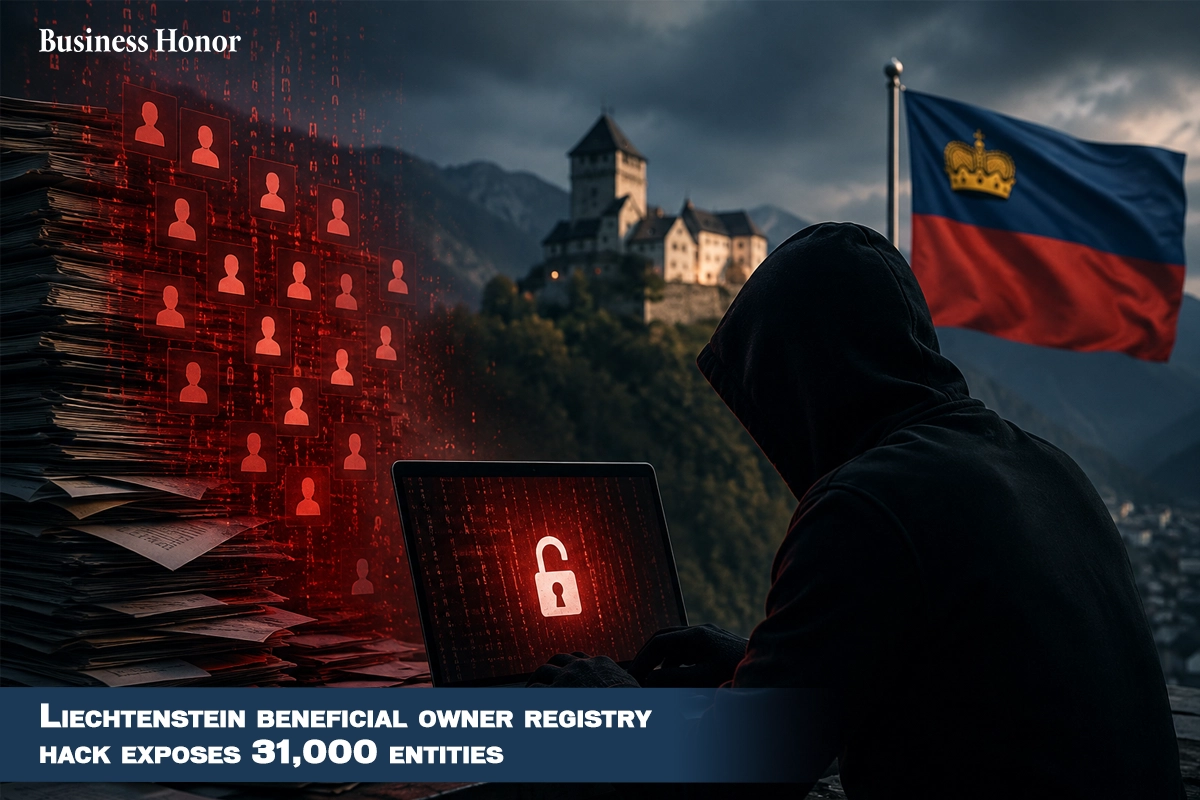
Liechtenstein beneficial owner registry hack compromises data on 31,000 legal entities. No bank or customer data affected, but the breach raises trust questions.
|
Liechtenstein has confirmed a major breach of its beneficial ownership infrastructure, saying hackers illegally accessed and copied data from the register of beneficial owners. The government estimates the incident compromised information tied to about 31,000 companies, foundations, and trusts, triggering emergency steps to contain the fallout.
The Liechtenstein beneficial owner registry hack reportedly began during the night of July 29-30, when unknown perpetrators gained unauthorized access and copied data before officials detected irregularities and took the affected system offline. Authorities say there is currently no indication the hacked data has been altered or deleted.
This is not a routine cybersecurity incident, because the beneficial ownership register is meant to increase transparency under anti-money laundering rules. Created through a 2021 act, the beneficial ownership register is intended to help track who ultimately controls legal entities, including those structured through low-tax trusts that have long drawn global scrutiny.
Officials say the preliminary investigation found copies of data on around 31,000 legal entities were obtained. Liechtenstein emphasized that no banks or customer data were affected, with the Liechtenstein Bankers Association director, Simon Tribelhorn, telling that the incident should not be treated lightly. A crisis task force led by Prime Minister Brigitte Haas and Justice Minister Emanuel Schaedler has been formed, and authorities are working to notify affected individuals.
Even without direct customer impact, a Liechtenstein beneficial owner registry hack can still reshape risk profiles. Once beneficial ownership details are copied, the data may be reused for fraud, targeted pressure, or further illicit activities.
In a final contradiction at the heart of this case, Liechtenstein designed the beneficial ownership register to strengthen AML checks, yet the Liechtenstein hackers accessed data anyway. Business Honor If the safeguards fail after a system is created for transparency, is that confidence building or confidence theater?
For Readers tracking global financial integrity, the message is unmistakable: cybersecurity is no longer a back-office maintenance issue. When data becomes the very infrastructure of accountability, securing it is the primary line of defense.













.webp)

.webp)





.webp)


Comments
0 Comments