
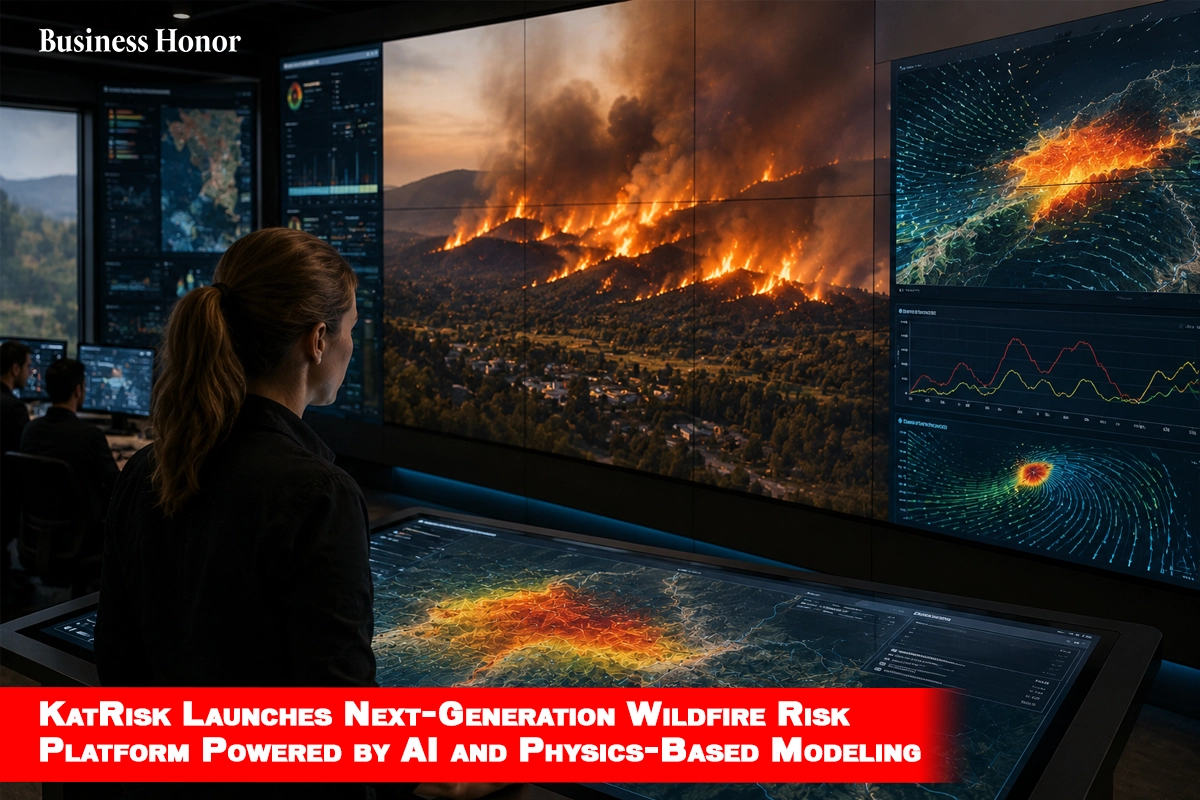
New solution combines Technosylva’s wildfire science with catastrophe analytics to help insurers improve wildfire risk assessment, underwriting, and climate resilience.
|
KatRisk has announced its new generation of wildfire risk solutions that combine Technosylva’s physics-driven wildfire behavior science with the catastrophe modeling and portfolio analysis capabilities of KatRisk to enable a superior approach to risk management in the insurance industry.
This move comes at a time when insurers and reinsurance companies are grappling with challenges of increased frequency and severity of wildfires caused by climate change. While traditional models use historical data, the model of KatRisk emphasizes ignition, spread, development, and the financial consequences of such wildfires.
Based on the wildfire modeling platform of Technosylva—a platform used by large utility companies, CAL FIRE, the U.S. Forest Service, and other emergency organizations in various countries around the world—this solution helps insurers understand AI-powered wildfire risk modeling and catastrophes.
KatRisk’s technology looks at the fuel, topography, weather, wind, smoke dispersion, urban wildfire dynamics, and the exposure of their portfolios to give more precise underwriting and pricing intelligence.
The system’s capabilities include 30-meter wildfire spread modeling for the contiguous United States, short- and long-range hazard forecasting, climate scenario analysis, smoke dispersion modeling, local vulnerability assessment, urban conflagration modeling, and fast portfolio analysis which can model over 50,000 years of simulated events in seconds.
According to Martyn Sutton, General Manager of KatRisk, wildfires are changing quickly, but many insurance companies rely on assumptions based on the past. By combining operational wildfire dynamics science with catastrophe analytics, insurance companies can better assess where catastrophic situation could be happening rather than where fires happened before.
“The wildfire science developed by Technosylva has proven itself in operational settings, where the outcomes can impact life, property, and essential services.” The transfer of this capability into the world of insurance is setting a new standard for climate risk analysis for insurers and catastrophe modeling.
This release comes on the heels of an increase in worldwide wildfires, including the destructive 2025 LA fires, and underscores the need for predictive wildfire intelligence based on science. According to KatRisk, their new capabilities improve underwriting, portfolio management, and climate risk assessment in the insurance industry. Business Honor believes predictive wildfire intelligence will become essential as insurers increasingly rely on AI-driven risk analytics to strengthen resilience and improve catastrophe preparedness.












.webp)

.webp)




.webp)


Comments
0 Comments