
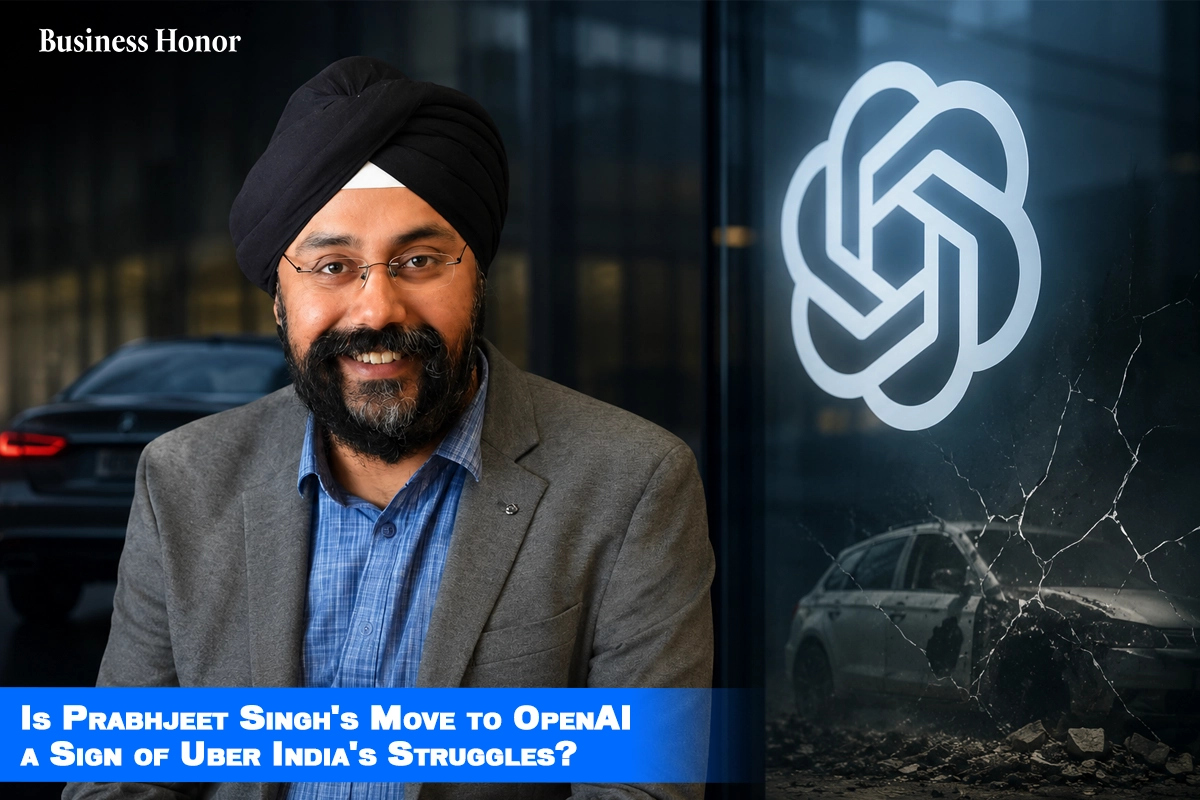
Prabhjeet Singh's transition from Uber India to OpenAI signals strategic leadership shift amid intensifying competitive pressures in India's mobility sector.
|
After 10 years with the Uber’s team in India, Prabhjeet Singh is transitioning to OpenAI as managing director for India. This signifies a significant change in leadership at the competitive and strategically important market for the ride-hailing platform. Singh will take up the new role in September, entering at a time when OpenAI makes a major escalation in its expansion across the fast-growing digital economies of Asia. His appointment gives a strong signal of OpenAI's ambition to build a solid base in India, where the application of artificial intelligence is changing business models within the consumer, enterprise, and government domains. Singh will report directly to Kiran Mani, whom OpenAI appointed managing director for the Asia Pacific region in March, making Singh the most senior leader for the company in the Indian subcontinent.
At OpenAI, Singh will be responsible for consumer growth, enterprise adoption, partnerships, regulatory engagement, and operational management. The objective will be to establish strategic partnerships that enhance the broader artificial intelligence ecosystem in India while promoting consumer, business, institutional, and government adoption to leverage AI capabilities. Singh's departure from Uber marks the end of an era- one that has transformed regional strategy.
Upon joining as GM & Uber India head of Strategy in August 2015, he eventually became President of UBER in June '20 after taking on an increasing number of responsibilities. During this time, UBER has focused its efforts on expanding service in the Tier II and non-Metro services to balance out the saturation effect in urban areas and allow UBER to take advantage of emerging market opportunities. Through initiatives, including Uber Moto, Uber Auto, and Intercity travel, Singh has built a significant portfolio of UBER services and expanded partnerships with fleet operators like Everest Fleet.
Singh's legacy will include innovations such as integrating UBER's platforms with metro ticket booking, which is now available in five cities and has been utilized by more than 10 million riders through the Government of India's ONDC. UBER reaffirmed its commitment to ONDC in February, investing ₹60 crore in the organization. Singh is credited with establishing India as one of UBER's most critical global markets for growth and innovation. A Company spokesperson stated, "UBER's success today reflects the great teams and foundational infrastructure that have been developed over the last ten years. We thank Prabhjeet for his incredible leadership and continuing influence during his tenure at UBER," and added, "UBER is dedicated to advancing our growth in India." However, Singh's departure arrives amid intensifying competitive pressures. Uber faces sustained challenges from homegrown platforms like Rapido and newer cooperative models such as Bharat Taxi, reflecting India's increasingly fragmented mobility landscape.
Business Honor is of the view that Prabhjeet Singh's appointment as OpenAI India managing director represents a strategic pivot toward artificial intelligence leadership expansion.
































.webp)

.webp)



.webp)



Comments
0 Comments