
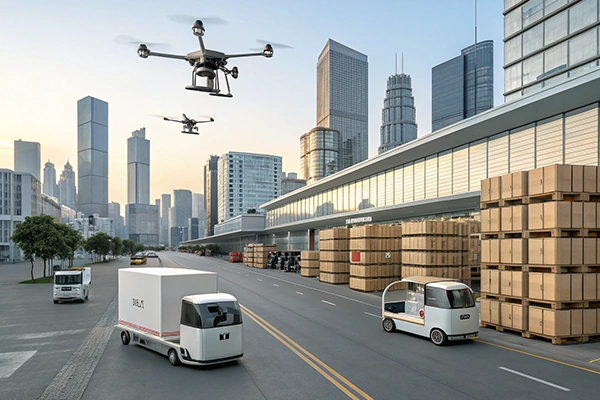
Last mile delivery stands as the final and most expensive segment of any logistics process. Last mile delivery in the year 2026 has undergone a significant metamorphosis due to the incorporation of artificial intelligence and automated technologies. As the world witnesses booming business in the field of e-commerce, the expectations of the customers have thereby increased. This segment of the logistics process has transformed significantly with the incorporation of intelligent technologies such as algorithms and robots to serve the customers more effectively.
Smarter Delivery Routes and Predictive Planning
One of the most profound effects of the integration of AI on LMD is the optimization of routes. The usual method of optimization involved the use of map images and other traditional ways of schedule development. In 2026, AI processes real-time traffic information, weather, fuel prices, and customer delivery windows for the development of the best routes for delivery.
Other types of advanced AI tools include predictive analytics in forecasting successful deliveries rather than failed deliveries. Through address verification techniques, companies can reduce failed delivery issues. Failed deliveries are one of the major problems that might occur during last-mile deliveries.
Autonomous Vehicles and Robotics
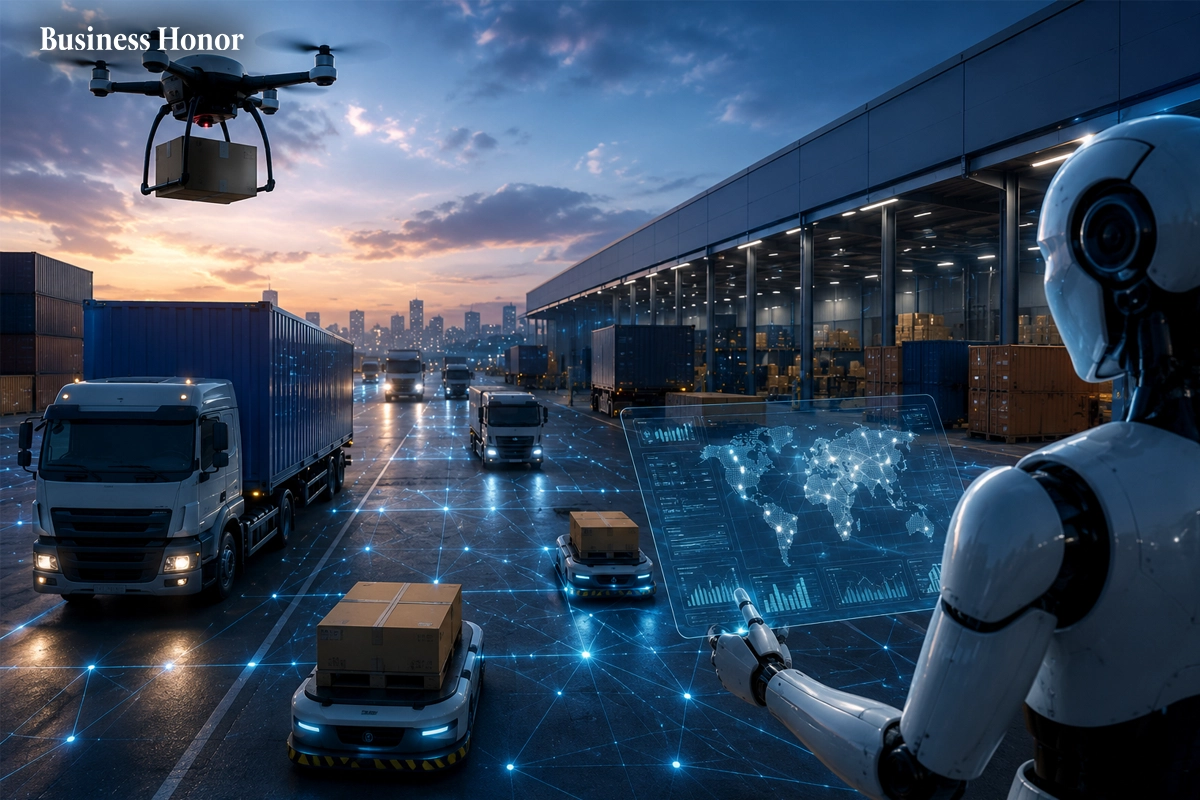
Automation can also extend beyond the realm of computer software to incorporate physical objects and entities. For example, in recent years, some cities have experimented with self-driving delivery vehicles, drones, and sidewalk robots to make local deliveries. These technologies can navigate through the urban environment and function with minimal human intervention.
In high-density fulfillment centers, the role of robots is the same. Robots help in the picking, packing, and sorting of items using AI, thereby helping in faster processing with fewer errors. As these robots learn from their surroundings, it helps in the overall efficiency of the supply chain.
Real Time Tracking and Customer Experience
The consumer of today needs to be aware of their deliveries at every stage of the process. This can be achieved by employing the use of Artificial Intelligence and automation. Today, the logistics platform provides detailed information regarding the status of the delivery and the precise time of arrival, as well as the specific location of drop-off.
"This greater transparency not only drives increased customer satisfaction but also helps to create a sense of trust, which is a powerful differentiator in a competitive environment." Having a precise idea of the location of the item to be delivered, as well as pre-emptive alerts on possible delays, helps to increase the reliability of the delivery service.
Load Optimization and Sustainability
AI is also important in load optimization, which implies the efficient loading of packages or parcels to the vehicle for delivery. This makes the number of trips minimal, and the fuel consumed is also minimal. This aspect is not only advantageous due to the economic benefits, but it is also environmentally beneficial. The fuel consumed is minimal, and the carbon emissions from the vehicle would also be low. This would result in a reduced carbon footprint, which is an aspect being considered by some companies.
Challenges and the Human Element
Despite these advancements, there are still challenges that companies need to overcome in the implementation of AI and automation in last mile delivery. This includes resolving the problems of data quality, integrating the new technologies with older technologies, as well as providing workers with effective maintenance capabilities.
Most importantly, these technologies are not replacing the human but complementing the decision-making process of the humans. Hence, while the AI system takes care of tasks such as repetition, route adjustment, and prediction, the human workforce concentrates on the task of complex decision-making, customer interaction, etc. This has led to the enhancement of the performance of the entire distribution system.
What’s next in 2026 and Beyond
While we go deeper into 2026, AI and automation are set to continue to transform last mile delivery. Hybrid delivery programs, featuring autonomous and human drivers, are set to become more prevalent. Logistical organizations that invest in scalable AI systems, data infrastructures, and automation technology are likely to meet ever-growing consumer demands.
In an industry where the final delivery can make or break customer satisfaction, AI and automation are not merely technological advancements but the backbone of effective, efficient, and sustainable last-mile logistics.











.webp)

.webp)




.webp)

