Monday, August 24, 2026
Business Honor
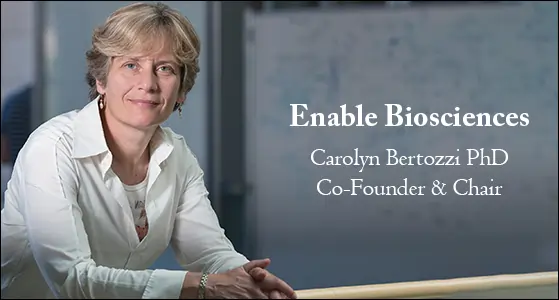
Enable Biosciences stands at the forefront of a revolution in predictive medicine, combining cutting-edge technology with a mission to address some of the most pressing challenges in healthcare. The company’s approach to diagnostics, particularly in the realm of autoimmune diseases such as Type 1 Diabetes (T1D), showcases the potential of advanced screening tools to transform how diseases are detected, managed, and treated. Founded in 2016 as a spin-out from UC Berkeley and Stanford, Enable Biosciences has rapidly emerged as a leader in the field of predictive medicine. With a team composed of scientists, engineers, and clinicians, the company works to create innovative diagnostic tests that provide early detection of diseases, especially autoimmune disorders. Through strategic partnerships with renowned institutions such as Stanford Healthcare, Harvard Medical School, and the California Department of Public Health, Enable Biosciences has positioned itself as a key player in advancing healthcare solutions that are not only more accurate but also more accessible.
The Challenge of Type 1 Diabetes: Early Detection is Crucial
Type 1 diabetes is a chronic autoimmune disease that destroys insulin-producing cells in the pancreas, leading to the body's inability to regulate blood sugar. Diagnosed mostly in children and young adults, the disease currently affects over 1.25 million Americans, with approximately 40,000 new cases diagnosed annually. The peak age of diagnosis is between 2 and 17 years, and it is often accompanied by dangerous and potentially life-threatening complications such as diabetic ketoacidosis (DKA), a condition that results from high blood sugar levels and the body’s inability to produce enough insulin. The key challenge in managing Type 1 diabetes is the lack of early, reliable diagnostic methods. By the time symptoms of T1D become evident—such as excessive thirst, frequent urination, and weight loss—the disease has already progressed significantly. Tragically, many children are diagnosed only after they are hospitalized with DKA, which can result in long-term health complications.
The ADAP Assay: A Game-Changer in Autoantibody Testing
At the core of Enable Biosciences’ innovation is the ADAP (Antibody Detection and Profiling) assay, a highly sensitive and specific diagnostic tool developed by the company. The ADAP assay is designed to detect the autoantibodies associated with Type 1 Diabetes long before clinical symptoms manifest. This early detection capability is a crucial step in managing the disease effectively, as it can help identify individuals at risk and allow for interventions that may delay or even prevent the onset of T1D. The assay has demonstrated its performance at leading scientific forums, such as the Immunology of Diabetes Society (IDS) Congress, where it was recognized for its superior sensitivity and accuracy compared to traditional diagnostic methods. Enable Biosciences' ADAP assay is among the top-performing assays globally, providing a crucial tool for early disease detection. In addition to its diagnostic accuracy, the ADAP assay can identify individuals at risk of T1D, enabling healthcare providers to take preemptive measures and potentially delay the onset of the disease. This is especially important considering that up to 40% of new cases are diagnosed with diabetic ketoacidosis (DKA), a condition that can lead to emergency hospitalization and significant medical complications.
The Impact of Early Detection: Reducing Complications and Improving Quality of Life
The benefits of early detection for Type 1 diabetes cannot be overstated. By identifying at-risk individuals before the onset of symptoms, Enable Biosciences’ testing can prevent the severe medical complications associated with late-stage diagnosis. For example, individuals identified through early autoantibody testing may be enrolled in clinical trials for preventive treatments or begin a management plan that includes lifestyle adjustments or early interventions to delay the progression to full-blown Type 1 diabetes. One of the major challenges of diagnosing T1D late is the risk of diabetic ketoacidosis (DKA), which can be fatal if not treated promptly. Early detection through autoantibody screening can reduce the incidence of DKA at diagnosis, ultimately improving patient outcomes and reducing healthcare costs. Additionally, early identification of those at risk can help prevent complications such as kidney disease, neuropathy, and vision loss, which are common among those who are diagnosed late.
Furthermore, early screening can also improve the overall quality of life for patients and their families. With early knowledge of the disease, families can make informed decisions about managing the condition, implementing lifestyle changes, and accessing support networks before the disease becomes unmanageable.
A Broader Vision: Expanding Applications in Autoimmune Diseases
While Type 1 diabetes is one of the main areas of focus for Enable Biosciences, the company’s innovative technology holds promise for a wide range of autoimmune diseases. Celiac disease, food allergies, and Lyme disease are just a few of the conditions that Enable Biosciences is working to address using its advanced diagnostic assays. In the case of celiac disease, Enable Biosciences has developed a non-invasive saliva assay that can detect individuals at risk for the condition. Celiac disease, which affects about 1% of the U.S. population, is a disorder where the immune system reacts to gluten, causing damage to the small intestine. Diagnosing celiac disease can be difficult, as many patients do not experience typical gastrointestinal symptoms. The company’s saliva-based test is simple and convenient, making it easier for individuals to get tested and diagnosed early.
Food allergies are another area where Enable Biosciences is making strides. The company is developing an ultrasensitive assay to detect IgE antibodies for common allergens such as peanuts, tree nuts, eggs, and shellfish. With food allergies affecting over 26 million Americans, including 3 million children, early detection is crucial. Enable Biosciences’ test aims to provide more accurate results while reducing false positives and negatives, which are common with current testing methods. Lyme disease, a bacterial infection transmitted through tick bites, has also been a focus of Enable Biosciences’ research. The company has developed a multiplex Lyme and tick-borne disease immunoassay that promises to improve early diagnosis. The current two-tier serological testing system for Lyme disease identifies less than 40% of early infections. Enable Biosciences’ assay has shown superior sensitivity, increasing the likelihood of detecting Lyme disease at its earliest stages, which is critical for effective treatment and preventing long-term complications.
The Future of Predictive Medicine
Enable Biosciences’ work exemplifies the future of healthcare—one where early detection and personalized care are at the forefront. By leveraging cutting-edge technologies and focusing on autoimmune diseases, the company is paving the way for a new era of diagnostics that can help prevent diseases before they take a toll on patients' lives. As the company continues to expand its research and development efforts, Enable Biosciences is well-positioned to make significant advancements in not only Type 1 diabetes but also a variety of other autoimmune diseases. Their commitment to innovation, along with their partnerships with leading healthcare institutions and research organizations, ensures that their impact on the healthcare landscape will only continue to grow.
In the coming years, Enable Biosciences’ advancements in predictive diagnostics will play a key role in transforming healthcare from a reactive system to a proactive one, ultimately improving patient outcomes and enhancing quality of life for individuals affected by autoimmune diseases.
Carolyn Bertozzi PhD, Co-Founder and Chair






.webp)




.webp)

