
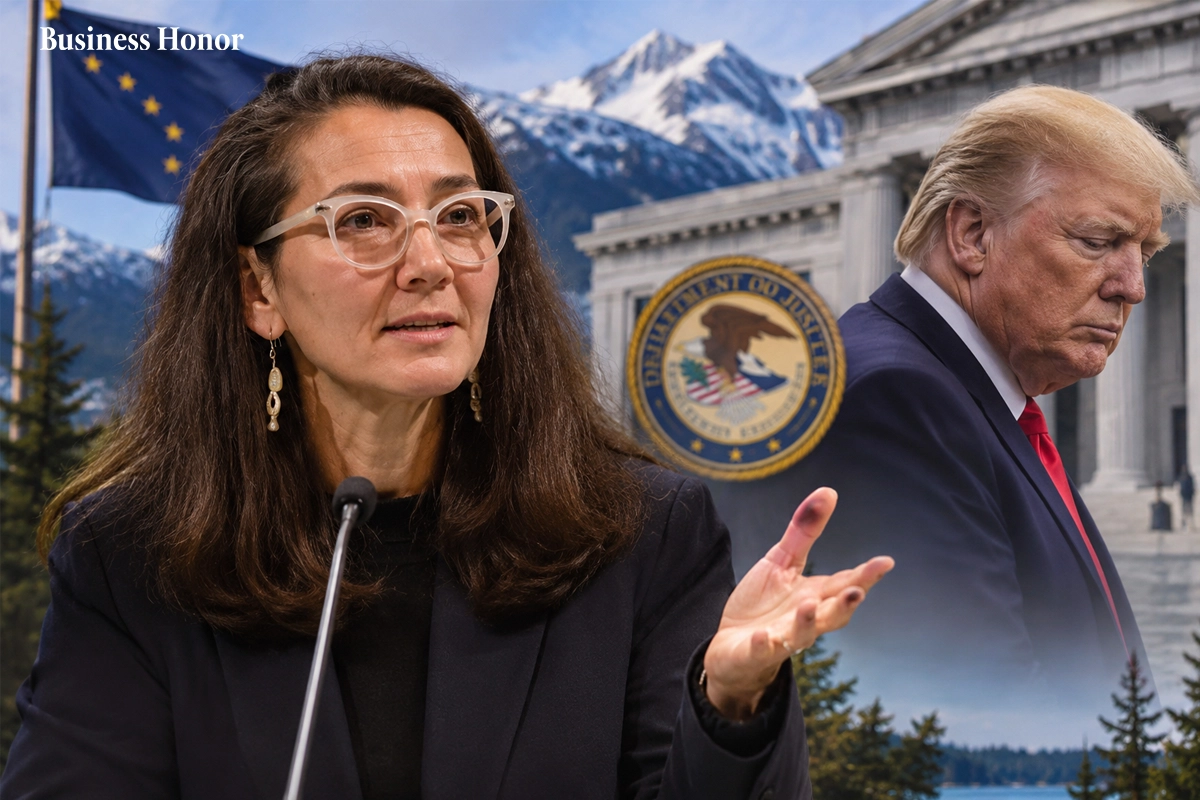
Alaska Senate Lawsuit takes a sharp turn as Trump's DOJ seeks dismissal after Mary Peltola's victory. But why did the legal challenge fail?
|
The Alaska Senate Lawsuit has taken a dramatic turn after the Trump administration moved to withdraw its legal challenge against the certification of Democrat Mary Peltola's victory in the state's Senate election. The Justice Department's decision comes two days after Peltola secured an outright majority, ending a controversial legal battle that had raised questions about federal involvement in state election processes.
The Justice Department filed a request with the 9th U.S. Circuit Court of Appeals on Thursday, November 19, asking the court to declare the case moot and dismiss it. The lawsuit, initiated at President Donald Trump's direction, sought to prevent Alaska from certifying the election result if Republican Senator Dan Sullivan lost.
But why did the administration challenge the election in the first place?
The dispute centered on two candidates with nearly identical names. Alongside incumbent Republican Senator Dan S. Sullivan, another candidate, Daniel J. Sullivan Jr., appeared on the ballot. The administration argued that voters could have confused the two candidates, potentially affecting the election outcome.
However, the Alaska Supreme Court had already ruled that the second Sullivan could legally appear on the ballot. Earlier in November, a federal judge also dismissed the administration's lawsuit.
The Guardian reported that Peltola secured 50.13% of the vote, winning more votes than the combined totals of the other candidates. Her Mary Peltola Alaska Senate Victory gives Democrats another seat in the upper chamber.
In its latest court filing, the Justice Department acknowledged the difficulty of examining voter intentions after ballots had been cast.
Associate Attorney General Stanley E. Woodward wrote, "The United States therefore reluctantly acknowledges that there no longer exists any means of 'determin[ing] whether votes cast for Daniel J. Sullivan were meant to be cast for Senator Sullivan.'"
Is the legal challenge ending because the election result has become impossible to reverse?
Responding to the development, Peltola said, "Now that the election is over and the voters sent a very clear message about the direction they want our state to go in, I'm eager to move forward and get to work on behalf of all Alaskans."
The controversy, however, extends beyond the courtroom. Reports raised questions about whether Peltola's campaign associates helped recruit the second Sullivan. Peltola denied involvement, while the second candidate maintained that he ran independently.
Could this dispute change how election challenges are handled in future Senate contests?
Business Honor observes that the Alaska Senate Lawsuit exposes a difficult question about the balance between election oversight and political interference. While concerns about voter confusion deserve scrutiny, challenging an election also requires credible legal grounds. The administration's decision to seek dismissal leaves that debate unresolved, even as Peltola prepares to take her seat.
FAQs
Why is the Alaska Senate Lawsuit being dropped?
The Trump administration asked the appeals court to declare the case moot because the election has been decided and voter intentions can no longer be determined.
Who won the Alaska Senate election in 2026?
Democrat Mary Peltola won with 50.13% of the vote, defeating Republican incumbent Dan Sullivan.
Why did Trump challenge Mary Peltola's election victory?
The administration argued that two candidates with similar names on the ballot could have confused voters and affected the result.
What did the Justice Department say about the Alaska Senate Lawsuit?
Associate Attorney General Stanley E. Woodward acknowledged that there was no longer a way to determine whether votes for Daniel J. Sullivan were intended for the incumbent senator.
What does Mary Peltola's victory mean for Democrats?
Her victory gives Democrats their 56th Senate seat, marking another major gain for the party in the 2026 midterm elections.













































.webp)


.webp)



Comments
0 Comments