
Reading Time: 7 Minutes
Executive Summary
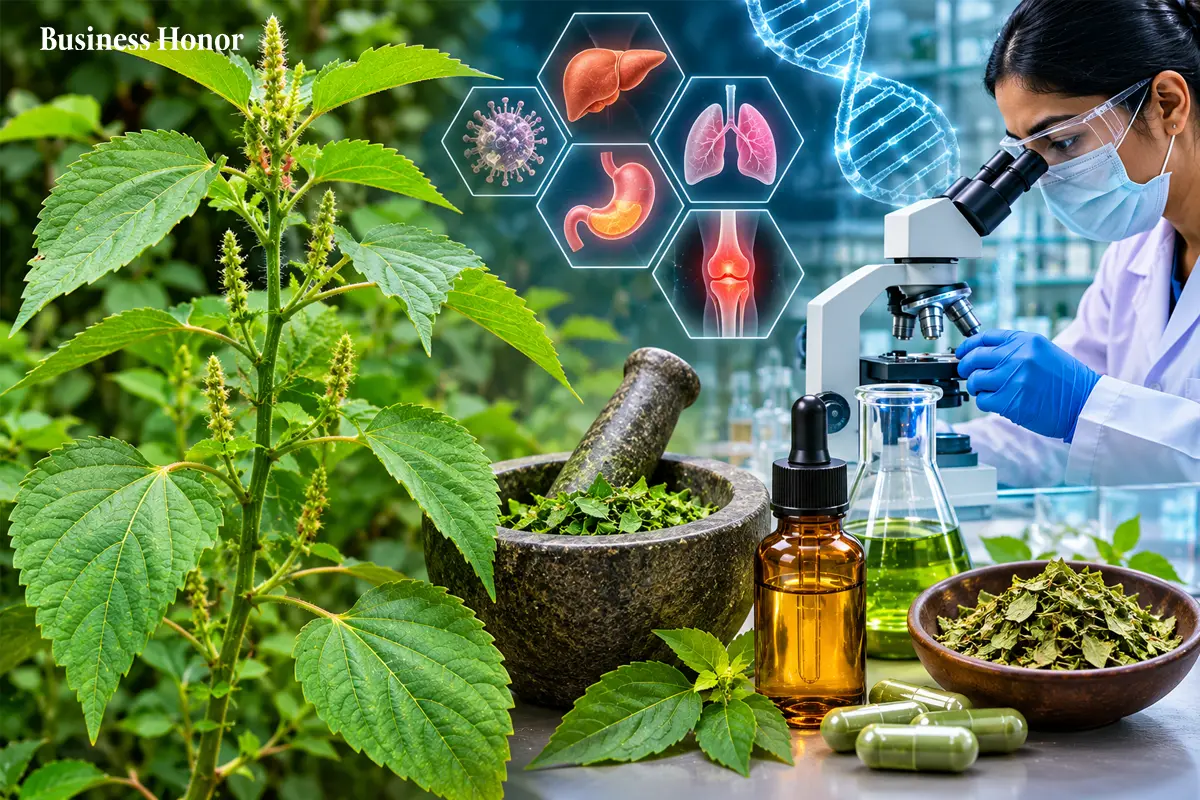
Acalypha indica is a small herb that grows wild across India. Most people know it as Kuppaimeni. It carries a mix of natural compounds that lab studies link to fighting germs, calming inflammation and helping wounds heal. If these extracts are made to a consistent standard, they could become a practical option for skin and chest problems.
1. Bio-Active Profile and Pharmacological Mechanisms
People in South Asia have used this plant for generations. They treat skin trouble, coughs and stomach complaints with it. It has a place in Ayurveda and Siddha, and it even has an official entry in the Ayurvedic Pharmacopoeia of India, published by the Ministry of Ayush.
Modern research now backs up some of that old wisdom. Scientists have found several active compounds in the plant. The main ones are acalyphine (an alkaloid), resinous esters, triacetonamine and quercetin derivatives.
One study tested a methanol extract made from the plant’s roots, both in the lab and in rats. The team found strong antioxidant and anti-inflammatory activity. They said the extract could one day help in making new anti-inflammatory drugs. The work was led by Sahukari, Korivi and their colleagues, including researchers at Zhejiang Normal University, and appeared in Molecules in 2021.
"For the first time, our findings demonstrated the potent antioxidant and anti-inflammatory properties of AIRME [Acalypha indica root methanolic extract], which could be considered to develop novel anti-inflammatory drugs." said Dr. P. R. Reddy et al., Exercise and Metabolism Research Center, College of Physical Education and Health Sciences, Zhejiang Normal University.
2. Extraction and Pharmacological Pathways
The process starts with fresh plant material soaked in alcohol or water. Straining the liquid leaves behind the useful compounds. These include acalyphine, quercetin, kaempferol, gallic acid, tannins and saponins.
Primary Mechanisms of Action
-
Fighting infection: Acalyphine and tannins appear to break down the outer wall of bacteria. That stops the germs from growing.
-
Easing inflammation: Flavonoids clear out harmful free radicals. They may also block COX-2, an enzyme that drives inflammation.
-
Helping tissue heal: Saponins and tannins speed up skin renewal. Wounds close faster and cleaner.
3. Key Phytochemical Constituents
Acalyphine
This alkaloid may help clear mucus from the airways and relax tight airway muscles. It also works against bacteria.
Flavonoids (Quercetin, Kaempferol)
These are plant antioxidants. They protect cells from stress and settle inflammation in the body.
Tannins and Cyanogenic Glycosides
These make the skin’s surface tighten up. They help slow minor bleeding and give new skin a chance to grow.
4. Clinical Applications Across Primary Therapeutic Domains
Dermatology and Wound Care
Fresh leaf paste or purified alcohol extracts go straight onto the skin. In lab tests they worked against common germs like Staphylococcus aureus, Pseudomonas aeruginosa and E. coli. They also seem to boost collagen, which makes new skin stronger. Commercial formulations such as mother tinctures are produced by established pharmaceutical suppliers including.
Respiratory Therapy
The plant is traditionally used to open narrowed airways and thin out thick mucus. Research in the Journal of Ethnopharmacology suggests the extracts relax airway muscles and tone down allergic reactions. At home, many people mix raw leaf juice with lime or honey to ease the hard coughing that comes with asthma or bronchitis. Findings in the Journal of Ethnopharmacology show that these extracts relax airway muscles and reduce allergic hypersensitivity. Traditional preparations combine raw leaf juice with lime or honey to ease severe coughing fit to asthma or bronchitis.
Parasitic and Gastrointestinal Care
Traditional healers often brew the whole plant into a drink to clear intestinal worms. The compounds are said to paralyze parasites like Ascaris lumbricoides. A mild laxative effect then helps the body push them out.
- Old Ways vs. New Methods
|
Traditional approach |
Modern standardized approach |
|
|
How it’s made |
Crushed leaves, fresh juice, simple brews |
Multi-step lab filtering with alcohol and water |
|
Dose |
Changes with the season and the plant’s age |
Fixed to set chemical levels (for example, % acalyphine) |
|
How we know it works |
Passed down through long use and observed results |
Tied to specific cell targets, enzymes and tissue response |
|
Quality checks |
Easily affected by dirt and pollution |
Tested for heavy metals; covered by the Drugs and Cosmetics Act, 1940 under CDSCO, with food safety rules from FSSAI |
6. Safety Guidelines and Regulatory Policies
This plant isn’t safe for everyone. The biggest danger is for people with G6PD deficiency, an inherited shortage of an enzyme that protects red blood cells. When these people eat the plant, their red blood cells can break down suddenly. Doctors call this acute haemolysis. It can also cause methaemoglobinaemia, where the blood carries less oxygen than it should.
A poison-centre study in Thailand described eight patients who got sick after drinking the plant as juice or a boiled brew. Most had dark urine, and many had jaundice or fever (Pradoo et al., International Journal of General Medicine, 2020). A case report in BMJ Case Reports describes a patient who developed temporary G6PD deficiency after taking it.
If you have G6PD deficiency, don’t take raw extracts by mouth.
"The adverse effects that have been reported in humans are acute haemolysis and methaemoglobinaemia... Most patients with acute haemolysis were confirmed to have glucose-6-phosphate dehydrogenase (G6PD) deficiency."
Contraindications and Risks
Business Honor examines that Despite its proven medicinal benefits, Acalypha indica carries specific safety risks. Toxicology literature on the National Center for Biotechnology Information (NCBI) warns that individuals with glucose-6-phosphate dehydrogenase (G6PD) deficiency must avoid oral intake of raw extracts. In these individuals, active plant compounds can cause rapid destruction of red blood cells.
Regulatory Compliance in India
Commercial entities manufacturing botanical therapies in India must operate in compliance with the Drugs and Cosmetics Act, 1940. The Central Drugs Standard Control Organization (CDSCO) oversees medical and clinical safety standards, while the Food Safety and Standards Authority of India (FSSAI) sets criteria for consumable botanical products.











































.webp)


.webp)



Comments
0 Comments