“Petram Technologies is increasing rock-breaking yield by up to 20 times and reducing costs by over 60%, all while minimizing noise, dust, vibration, and water use—proving that sustainability and performance can go hand in hand.”
Innovations in sustainable energy are more important than ever in a society that is rushing to reduce emissions and redefine how we sustain our planet. The future demands transformational technologies—rethinking how we harness geothermal heat, extract lithium, and reshape construction.
At the heart of this movement stands Petram Technologies, a cleantech pioneer founded by industry veteran Franco Magnotti. Petram’s journey began with a bold idea: adapting a NASA-funded, moon-rock-breaking technology into a real-world disruptor. The result? Their High-Power Electric Pulse (HPEP) system—a tool so powerful and energy-efficient, it can release a 1.21-gigawatt pulse using the caloric energy of a single Hershey’s Kiss.
Petram aims to reduce global CO₂ emissions by one million metric tons annually. By amplifying resource yields and reducing water use, noise, and vibration, Petram is not just innovating—they’re leading the charge toward a cleaner, more sustainable world.
A Dialogue on Disruption: Speaking with Petram Technologies’ CEO and Co-Founder—Franco Magnotti
Petram began with acquiring the exclusive license of a patent from Auburn University with funding from NASA for the most energy efficient way to break rocks on the moon. How did that origin shape the company’s direction and the development of your High-Power Electric Pulse (HPEP) technology?
The technology was immediately applicable on Earth but was purely a laboratory demonstration with no regard to economics or to lifetime. Petram set out to determine which industries and where we could have the biggest impact economically, environmentally, and efficiently. We then started working with industry leaders in oil and gas, underground utility infrastructure and construction and demolition contractors to determine the right product features, product requirements, operational and safety rules, and price points we had to meet.
What sets Petram’s rock-breaking technology apart from traditional methods in terms of environmental impact and efficiency?
The ratio of power output to energy input is phenomenal. The system requires only 0.03 kWh to charge the system. To put in layman’s terms, that is the equivalent of a very small 2 kW generator running for 57 seconds. We also create a 220,000-psi shock wave, which is one to two orders of magnitude greater than the strength of any concrete or rock and rips through the rock, creating long and dendritic crack patterns. Traditional methods try to crush the rock, which is much stronger in compression.
Your mission includes reducing global CO₂ emissions by 1 million metric tons annually. How close are you to achieving that goal, and what are the biggest levers driving that reduction?
We provide just 5% of the carbon footprint of traditional jackhammers while delivering the same output. Achieving our mission to reduce global CO₂ emissions by 1 million metric tons annually could be possible if we replaced all jackhammers with our Mjölnir (Thor’s Hammer).
You’ve secured over 10 patents for your technology. What are some of the key innovations protected by those patents, and how do they contribute to Petram’s competitive edge?
The patents cover a breadth of industry-specific applications and depth in both the system and probe designs. For example, in highways and bridge decks requiring wide, shallow breakage, we have designs that can directionally shape the plasma bubble shock wave.
Your applications span energy, construction, and environmental restoration. Which of these markets currently shows the most rapid growth, and where do you see untapped potential?
The demolition and underground utility infrastructure are growing the most rapidly. Geothermal has the most untapped potential starting with residential heat pumps next year and industrial in two to three years.
In geothermal, hydrogen and lithium, how does Petram support the global shift toward more sustainable energy sources?
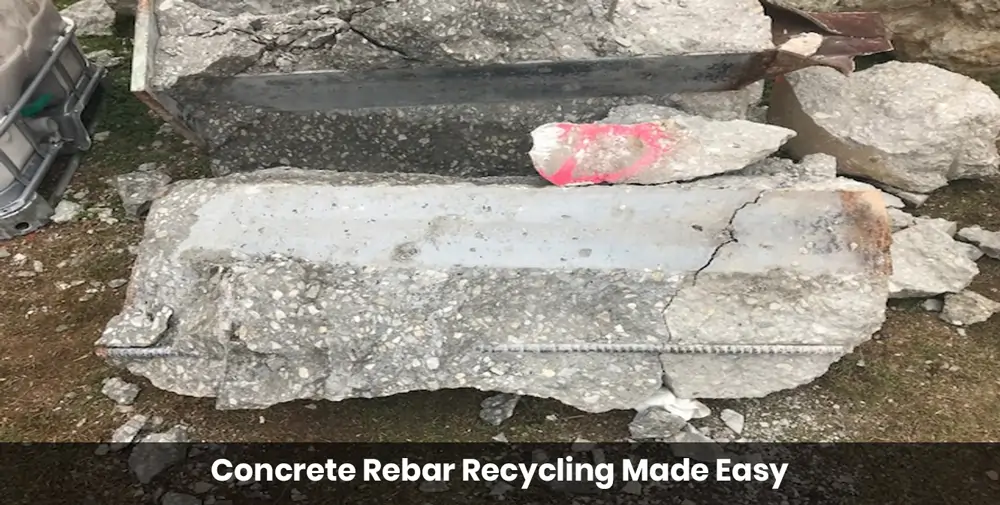
Petram increases the permeability of rock right outside the well casing, allowing a ten to one hundred percent increase in heat and hydrogen flow. If we double the output, only ½ the wells need to be drilled, so we are both increasing the amount of sustainable resources and reducing the carbon footprint through our efficiency. Lithium extraction will follow the same technical and “life” principles as our concrete-rebar recycling.
You’re enabling up to a 20X increase in yield and over 60% cost reductions for clients. Can you share a specific case study or client success story that exemplifies these gains?
We were given requirements to meet the current output of bedrock breaking in excavating near an existing gas pipeline in an underground NYC environment while achieving 40% of the existing cost and meeting the stringent safety requirements. We met the cost requirement at an output that was 20x faster with just 1% of the noise, dust, and vibration.
Sufficient water resource is a major concern in dry rocky geographies and traditional fracking uses lots of water. Tell us how your technology helps with both issues.
Petram’s technology to increase the permeability of the rock outside the well casing works in both cases. In residential wells, insufficient flow causes deeper drilling. Our technology achieves the same flow at shallower depths. Likewise, in oil and gas fracking, where only 10% of resources are typically recovered, increased rock permeability allows significantly fewer wells to be drilled—reducing costs, carbon, and water use.
What have been the biggest technical or regulatory challenges in bringing Petram’s disruptive technology to mainstream industries?
The biggest challenges we faced included, first, developing a probe that could withstand more than a single shot to make the system viable. Second, we had to align as closely as possible with existing operational procedures to ensure ease of adoption. Third, there was a necessary timeframe to conduct demonstrations in labs, test facilities, and non-operational field sites before gaining approval to work on real, critical infrastructure. We’re pleased to share that the probe now endures over 25 shots making it economic and operationally efficient.
Looking ahead, what’s next for Petram Technologies in terms of innovation, partnerships, or geographic expansion?
We will continue to innovate our technology through the use of advanced AI-driven design methodologies. However, we do not intend to operate as a service provider. Instead, we plan to build out a 100-dealer network across the U.S. over the next few years before expanding globally. We also foresee a partnership with a car manufacturer that produces electric construction vehicles. This collaboration makes sense, as using our tool for 50% of operations could allow a 25% reduction in the vehicle’s battery size.
Frank “Franco” Magnotti
CEO and Co-Founder of Petram Technologies
Frank Magnotti is a Cleantech veteran with over 30 years of experience in leading startups, achieving two public exits. He has founded companies that have won prestigious awards, including Top Cleantech Innovation in San Francisco, New York, and Paris. His companies have sold to over 500 utilities across 50 countries. Frank began his career at AT&T Bell Laboratories, where he founded the Utility Solutions Division. He holds a bachelor’s and master’s degree in mechanical engineering from Cooper Union. Notably, his first company that went public initially had only intellectual property and no funding or employees, and his master’s thesis, ironically funded by NASA, focused on the chemical kinetics of hydrogen-oxygen combustion in SCRAMJET engines. With Petram, Frank’s vision has always been “in the stars.”
“Petram Technologies doesn’t just offer a tool—they deliver a transformative solution that enables clients to break rock faster, quieter, and at a fraction of the cost, while slashing environmental impact.”
“Like all things in life, our rock breaking occurs at the weakest link. In concrete rebar recycling, that fortunately occurs at the interface of the rebar and concrete.”
.webp)










.webp)

