Monday, October 05, 2026
Business Honor
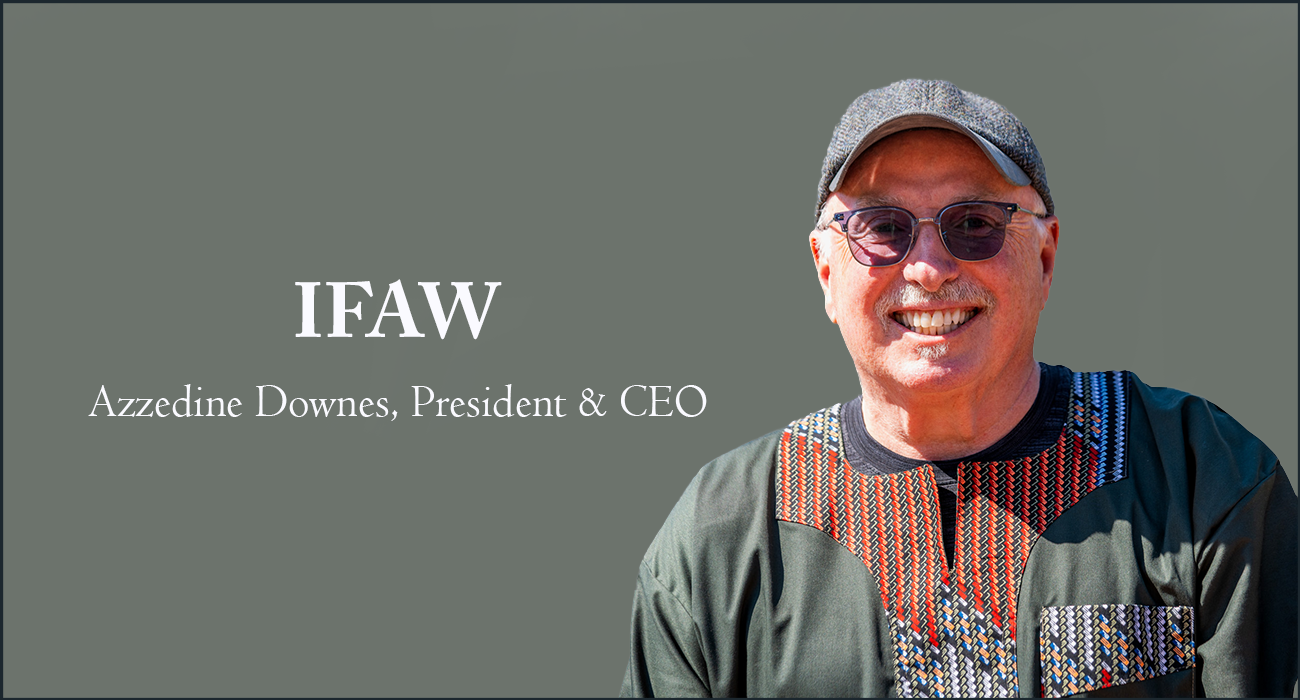
The importance of international organizations in environmental protection has grown as conservation challenges become more complex. IFAW was established nearly six decades ago in response to global concern over the commercial seal hunt in Canada and has since evolved from a single- issue organization into a global leader in animal welfare and conservation. IFAW continues to adapt its structure and approach to address interconnected challenges, including habitat loss, illegal wildlife trade, climate-related disasters, and human–wildlife conflict. A key element of its work is innovative solutions such as transnational wildlife corridors that connect fragmented landscapes and support species movement.
Azzedine Downes, President & CEO of International Fund for Animal Welfare, discussed the organization’s evolution, conservation strategies, partnerships, and technology- driven, community-focused approach to global wildlife protection.
Below is an excerpt from the interview
What inspired the founding of IFAW, and how has its mission evolved in response to global conservation challenges over time?
The founding of IFAW began in the late 1960s in Canada, amid the commercial seal hunt sparked global outrage. What started as a movement to protect one species in one region soon grew into something broader. Over time, it became clear these issues weren’t isolated—they were driven by larger forces, from habitat loss to climate change–related disasters to human-wildlife conflict. The mission expanded and is now built upon two core pillars: rescue and conservation. Today, our work reflects both—responding to animals in immediate need while addressing the conditions that put them at risk and ensuring they have safe places to live. All of this is grounded in the belief that people and animals must thrive together.
What are the primary areas of focus for IFAW, and how have its programs adapted to changing environmental and wildlife protection needs?
At IFAW, our work is grounded in two core areas: rescue and conservation—but increasingly, the impact lies in how they come together. We focus on arrange of key issues including protecting wildlife and habitats, rescuing animals in disasters, combating wildlife crime, and supporting communities who live alongside them. Over time, our programs have evolved to reflect how deeply interconnected these challenges are. That means moving beyond isolated efforts toward more integrated approaches—protecting landscapes, enabling wildlife movement, and working closely with local communities to create sustainable solutions. For us, adaptation has meant shifting from reacting to problems to proactively developing ways to prevent them.
Are there any distinctive initiatives, technologies, or field strategies that set IFAW apart from other organizations working in animal welfare and conservation?
What sets IFAW apart is many things but if I had to choose one, it would be our focus on connection—between animals, people, and the landscapes they share. One example is Room to Roam, an initiative that protects and restores migration corridors so species like elephants can move safely across fragmented habitats. It’s not just about protecting places—it’s about restoring the systems wildlife need to survive and thrive. We also invest in technologies like satellite tracking and data driven monitoring to better understand movement and reduce conflict. Equally important is our field strategy—working with communities living alongside wildlife as partners, not participants. This blend of science, collaboration, and long-term thinking defines our approach.
How does IFAW approach complex issues such as habitat loss, wildlife trafficking, and human– wildlife conflict to deliver effective and sustainable solutions?
At IFAW, we believe that habitat loss, wildlife trafficking, and human–wildlife conflict all stem from broader economic, environmental, and social pressures. Addressing them means working across these systems at once—protecting and restoring habitats, strengthening enforcement against illegal wildlife trade, and partnering with communities living alongside wildlife to reduce conflict and create shared value. Sustainable solutions depend not just on what we do, but how we do it—through partnerships, local engagement, and long-term commitment. The goal is to shift from short-term fixes to approaches that endure as conditions change.
With advancements in data science, conservation technology, and global collaboration tools, how is IFAW integrating innovation to improve impact and operational efficiency?
At IFAW, innovation happens on many fronts, including using technology to make smarter, more targeted decisions. We are increasingly integrating tools like satellite tracking, data analytics, and AI to better understand wildlife movement, anticipate risks, and respond more effectively. These insights help focus resources where they have the greatest impact— whether reducing human–wildlife conflict or strengthening protection efforts. At the same time, digital platforms enable more collaboration that is efficient across regions and more meaningful supporter engagement. However, technology is only as valuable as its application. For us, innovation means combining data, local knowledge, and practical action to deliver lasting results.
What differentiates IFAW in designing and implementing programs across diverse regions, cultures, and ecological systems?
One key point of differentiation for IFAW is our starting point— we begin by listening. Every landscape and community has its own realities, so our role is to understand those contexts and design solutions accordingly. That means working with local partners, respecting cultural perspectives, and adapting to ecological and social conditions rather than imposing external frameworks. It also requires consistency—clear communication, trust, and long-term presence on the ground. This allows us to operate globally while remaining locally relevant, ensuring programs are not only effective but embraced by the people who sustain them.
With decades of experience, what value does IFAW bring to partnerships with governments, local communities, and international organizations compared to independent conservation efforts?
With decades of experience, IFAW brings continuity and perspective—connecting efforts that might otherwise remain fragmented. Many conservation challenges are too complex for any one actor to solve alone, so our role is often to bridge— bringing together governments, communities, and international partners around shared goals and aligning priorities that don’t always naturally intersect. We combine field experience with policy engagement, helping translate on-the-ground realities into broader frameworks and commitments. Most importantly, we stay engaged over time. Effective partnerships are not built through short-term projects, but through trust, consistency, and a shared commitment to long-term outcomes.
Looking ahead, what are IFAW’s key priorities or upcoming initiatives over the next few years?
Looking ahead, IFAW is focused on saving lives and delivering impact while staying grounded in what works. A key priority is expanding landscape-level conservation through initiatives like Room to Roam—protecting and connecting critical habitats so wildlife can move safely across increasingly fragmented environments in Africa. We also see significant opportunity in leveraging technology to improve monitoring, engagement, and operational efficiency. Beyond any single initiative, the focus is on building solutions that are sustainable and replicable—solutions that endure over time and across geographies.
Is there anything else you would like to highlight—such as recent achievements, partnerships, or guiding principles that define IFAW’s work?
One of the key principles that continues to guide IFAW is simple: always do the right things first. That mindset shapes how we approach both partnerships and impact. Whether working with governments, strengthening collaboration with organizations like INTERPOL to combat wildlife crime, or supporting communities living alongside wildlife, our focus is on building practical, lasting solutions. We also recognize that conservation cannot be separated from broader global challenges— climate, development, and social equity—which reinforces our direction. What defines our work is a consistent commitment to act with purpose, advancing solutions that help animals and people coexist and thrive together.
What gives you hope for the future of conservation and animal welfare?
What gives me hope is the growing recognition that these challenges are shared—and that solutions must be shared as well. Across IFAW’s work, I see individuals, communities, and institutions coming together in ways that were not possible even a decade ago. There is a deeper understanding that protecting wildlife and supporting people living alongside them are not competing priorities, but connected ones essential to long-term success. I’m also encouraged by the next generation—despite the pressures they face, they bring a willingness to question, collaborate, and act. In this space, hope is not passive; it is essential and comes to fruition through action, and that is what I see happening.
Azzedine Downes | President & CEO of IFAW.webp)
As President and CEO of the International Fund for Animal Welfare (IFAW) since 2012 and since joining the organization in 1997, Azzedine Downes has worked closely with experts and decision makers from around the world, leading a groundbreaking period of geographic expansion and strategic consolidation to maximize impact.
Influencing international policies to create positive change on the ground, Azzedine led the signing of a historic lease agreement with a Maasai community near Amboseli National Park in Kenya, securing 16,000 acres of habitat for elephants, while helping to establish a first-ofits-kind cooperative framework between IFAW and INTERPOL’s Environmental Crime Program. Before joining IFAW, Azzedine served as the Chief of Party for the U.S. Agency for International Development in Jerusalem and Morocco and was appointed by President Clinton as Acting Regional Director for the United States Peace Corps in Eurasia and the Middle East. In 2015, Fast Company named him one of the “The Most 100 Creative People in Business,” and he has been listed among The Nonprofit Times’s “Power and Influence Top 50.”
Named to the prestigious Council for Hope of the Jane Goodall Legacy Foundation in 2023, Azzedine joins a group of prominent global thought and business leaders committed to using their influence to improve the world around us. His first book, a personal memoir entitled The Couscous Chronicles was released in 2024. He was recently awarded the prestigious Order of the California Condor award in conservation. A graduate of Providence College and Harvard University, Azzedine is fluent in Arabic, English, and French.

















.webp)

.webp)
.webp)