Sunday, September 20, 2026
Business Honor
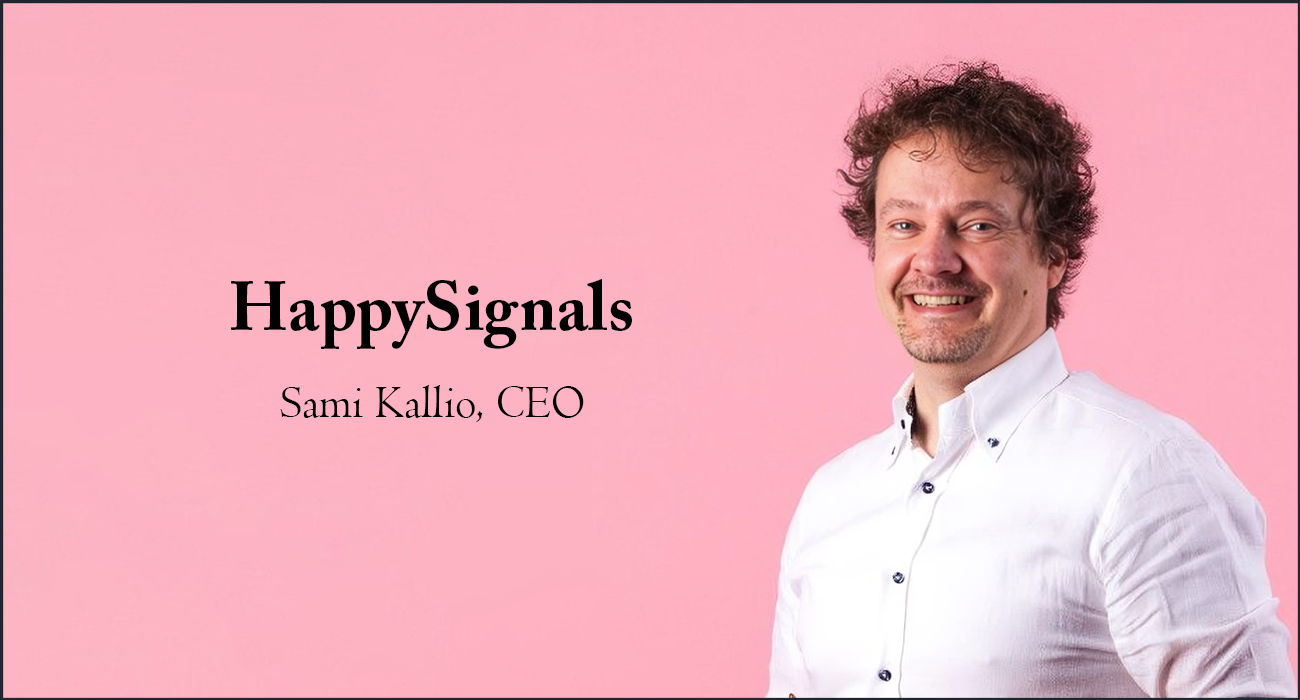
HappySignals focuses on evaluating and analyzing the human experience inside of IT environments; this is accomplished through the creation of a method to capture how employees feel about their IT services and digital tools. The HappySignals platform helps connect these feelings about IT Services/Digital Tools to the operational data underlying them; thus, increasing the focus on understanding the overall impact of technology on productivity and everyday work rather than only analyzing performance metrics like system uptime, service-level compliance, etc. HappySignals collects employee feedback and combines it with data generated from IT systems; therefore, by looking at both employee feedback and data generated from IT Systems; organizations can see where processes work properly from an IT standpoint but continue to create user friction (i.e., poor User Experience).
This combination of data sources helps organizations determine where there are performance gaps between the IT system and the end user's experience, and this is especially useful for organizations with a multitude of tools and workflows intersecting each other in a complex work environment. In addition to providing support for both IT Service Management and Digital Workplace Initiatives, HappySignals creates a shared experience model that links both of these initiatives and that is essential for organizations to understand what is occurring in the IT systems (functional metrics) and how those functional metrics are perceived by the end-users of the IT Systems.
Solutions Offered by HappySignals Ltd
IT Service Management (Service Desk)
The HappySignals ITSM solution aims to connect service desk operations with employee experience by linking satisfaction data and operational data collected via the ITSM system to better understand how service delivery impacts end-users' and their overall experiences as well as identify any areas of potential inefficiencies in the service delivery process. The platform collects feedback on an individual service interaction level, allowing organizations to analyze user experiences based on ticket number, service category, communication channel, and resolution process, and correlate that information with operational metrics to see patterns that cannot be identified solely through performance indicators. For example, while a service may meet formal performance targets, an employee's experience with that service may be poor because of delays, multiple handoffs, and/or unclear communication about the status of their request.
The HappySignals solution also provides the ability to segment feedback data based on user roles, work conditions, and other contextual factors, making it easier for organizations to analyze experiences and determine how different user groups are affected by IT services. Organizations also will be able to identify recurring issues that disproportionately affect certain teams or workflows.
Digital Employee Experience (DEX)
HappySignals' Digital Employee Experience solution offers a more complete way to measure how digital workplaces operate in practice by providing a human lens to what is monitored through traditional technical monitoring systems. Traditional DEX solutions typically measure device performance, application usage, and network conditions, while the solution uses feedback from employees about their experience with the tools and systems they use to provide more comprehensive insights into how digital workplaces operate. They collect experience data from employees, and analyze it with technical telemetry data, so there is an integrated view of both the behavior of the system, as well as the experience of the user. By combining these data sources, organizations can identify areas where there is a gap between technical performance and usability, such as when something appears to be working well, but is actually creating challenges for employees to get work done.
Another important aspect of the Digital Employee Experience solution is the ability for organizations to identify areas of pain that employees are experiencing through wait times, being confused, or not having a smooth experience. With this data, organizations can prioritize their efforts to improve the experience of their employees based on the impact that they have on daily work, rather than only addressing technical alerts. In doing so, organizations can ensure that they are focusing their efforts on improving both the performance and outcomes for their employees.
Enterprise Service Management (ESM)
HappySignals Enterprise Service Management (ESM) is the experience measurement for all internal services and departments (HR, finance, facilities) beyond just IT. It uses IT experience analysis principles across all types of services to give a more consistent view of how internal processes impact employees. Organizations will set experience-based targets in relation to the service type and target outcome instead of just process completion. Employees provide feedback after each time they interact with the various services, which enables organizations to evaluate how well each service supports employees in accomplishing their work on an ongoing basis. This approach illustrates instances where processes are technically complete but still create inefficiencies for employees or frustrate them.
Within the ESM system, there is integration of experience and operational data that allows organizations to get more context about the cause of any issues and how they affect productivity. The analytics tool analyzes both structured and unstructured data and can look for patterns or reoccurring situations across all types of service to help organizations find potential improvements in the quality of service.
Sami Kallio | CEO






.webp)

.webp)



.webp)

