Friday, October 16, 2026
Global Business Excellence Awards 2026
Business Honor
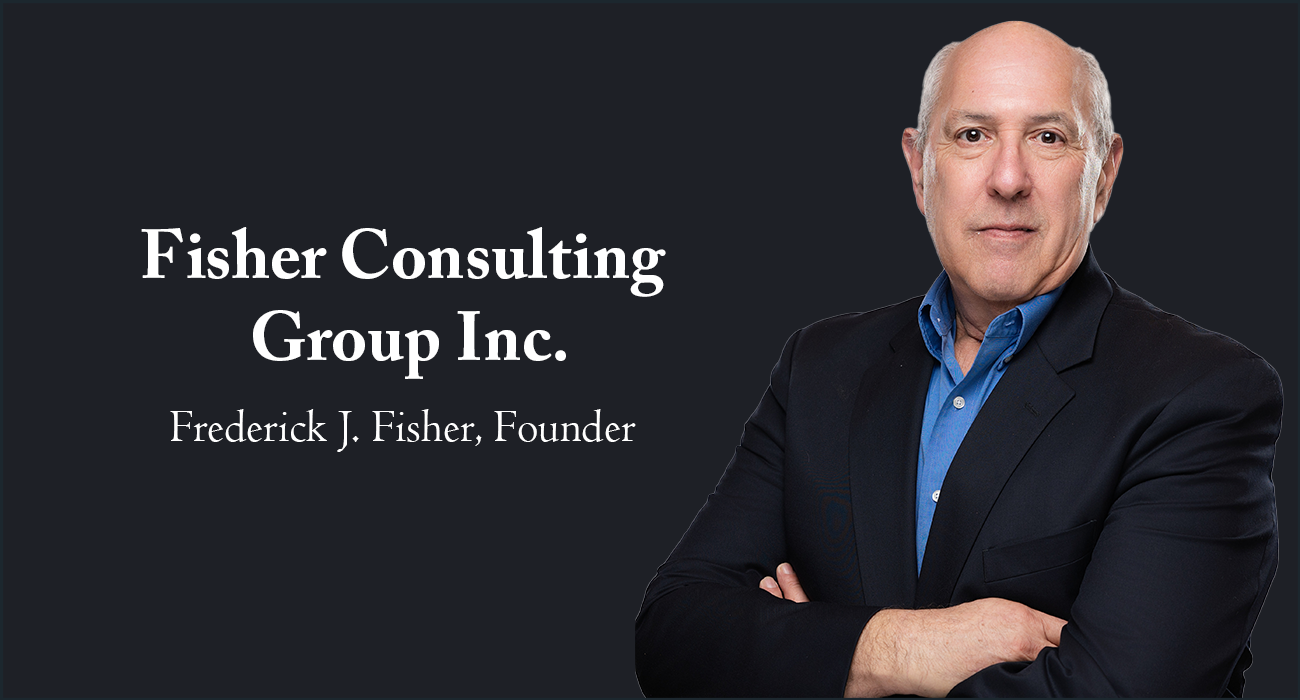
Fisher Consulting Group Inc. is a specialized consulting firm founded and led by Frederick J. Fisher, J.D., CCP, a highly respected authority in professional liability, insurance advisory, claims handling, and legal risk analysis. The company has built a strong reputation through industry education. Frederick J. Fisher has authored numerous articles and books, delivered hundreds of seminars and webinars, and mentored professionals throughout the insurance and legal communities.
The firm is also recognized for its thought leadership in the insurance industry, including the book the Insurance Journal recently called it “an irreplaceable Classic” titled “Claims Made Insurance: The Policy that Changed the Industry by Frederick J. Fisher. The book explores the complexities, risks, and evolving impact of claims- made insurance policies on the professional liability and C-Suite Executive marketplace. View the book on Amazon.
Frederick J. Fisher, Founder and CEO of Fisher Consulting Group Inc., spoke exclusively to Business Honor about his decades-long journey in professional liability, insurance advisory, claims handling, and legal risk analysis.
Below is an excerpt from the interview.
Could you take us through your professional journey and what initially drew you toward professional liability, insurance advisory, and legal risk analysis?
It was my initial work as a professional liability claim adjuster in 1975. I found the work fascinating, and the type of coverage offered at the time, claims made policy, to be equally fascinating. I got hooked on the concept as well as the work. It was fun, I loved learning how to do what I was doing the right way, and I believed in the system. I was also in Law School intentionally going at night. I figured if I had a complementing job during the day, I would have a better chance of getting a good job when I graduated and I was right about that!
Your career spans multiple domains. How has this broad industry exposure shaped your professional perspective?
As a professional liability Claims adjuster, I handled a lot of Insurance Broker E&O cases as well as Real-estate Broker E&O claims and Lawyers too. One never knew what the loss was about. It could be simple and easy or very complicated requiring a lot of analysis and document review. Creative settlements became the norm when possible and authorized. I also saw a lot of repetitive type of claims and noticed that many of those were preventable. As result of that, I started writing articles and giving continuing education seminars on how to do just that, how to behave in such a manner so as to prevent claims, including documenting the activity at the time so that one had the evidence.
What have been some defining milestones in your career?
Over the years, I have authored over 80 articles published, 2 books, and over 180 live educational presentations by webinar, live presentations etc. I also took my knowledge as a claim person and eventually opened up a wholesale insurance brokerage where we practiced and used our expertise, and our methodology to provide an excellent product and service as well as preventing E & O claims. Our corporate mantra was “we provide financial security; we let our competitors sell you some insurance” Our focus was providing financial security to our customer, which because of the work I did as a claim person, certainly understood the ins and outs of the policy forms we were selling. They are very dangerous and require a lot of thought to make sure that the needs of the policyholder are in fact fulfilled. That is what separated us from our competitors.
What inspired you to establish Fisher Consulting Group?
In the late 1980s, some attorneys decided that I had enough knowledge that I might be an effective expert witness. Even though I had a business to run, I was willing to take a couple of cases here and there, if I agree with it, and thought I can add value. I always figured that someday I might retire and need something to do so I figured maybe becoming an expert witness would work. I created a corporate shell upon which I can do such work. Ultimately, I did retire, somewhat, and now do expert witness work on a part-time basis. Apparently, there are those law firms that think I know what I am talking about, and think I make a good expert witness in cases in which I agree with the position they were seeking.
Where do professional liability problems most commonly originate?
Each type of profession, whether it’s an accountant, attorney, insurance agent or broker, real estate broker, medical practitioner, allied medical practitioner, each have their own respective hazards, perils and abilities. No one is perfect, and people do make mistakes. As a result, their customer or client may suffer injuries. This is why there is insurance to cover those services and the damages resulting from these errors. The other problem is coverage, as most professional liability policies, if not all, are written on a claims made, or claims made and reported basis. These policies can be very complicated, and I have authored numerous articles on their complexities and dangers. This includes my recent book, “Claims Made Insurance: The Policy that Changed Industry.” Selling or dealing with such policies requires expertise in order to do it correctly. I have been dealing with such policies since 1975.
What misconceptions exist around claims made policies?
Many professionals do not read the policy and often delay reporting claims on a timely basis. This has given rise to many claims being needlessly denied because of late reporting, or even failure to disclose a potential claim on the application in response to the questions asking about knowledge of any problem that could later give rise to a claim. People do not take those questions seriously, nor do they take reporting requirements of a claim seriously either. Prior to the publication of my book, I reviewed 224 such denials over a ten-year period, all of which I agreed with. There is no standardization of the policies themselves. There are as many as 20 different definitions of the word “claim”, making things even more complicated. Yet, the policyholders themselves are very sophisticated people. They are professionals, and well educated. The same is true of directors and officers as well. They too are usually savvy business people, but take their insurance for granted. Many think that if they report a potential claim in order to preserve coverage later that their premiums will go up and their renewal may be declined. This is not true. I know of a major engineering firm that reports over 200 such potential claims a year and has never had a renewal problem nor has their premium gone up. In addition, 99.9% of the claims they reported as potential matters never materialized into an actual claim.
How do weak placement decisions impact organizations?
If we are referring to an insurance producer selling insurance, it is going to give rise to litigation against them as a professional liability claim.
Producers need, but may not necessarily be required, to take the time to learn about what they are selling in order to avoid such errors. Unfortunately, that is not the standard of care in 37 states. Those states do not require any insurance producer to give advice or counsel to their customers unless they hold themselves out as experts, agree to do a risk management review for an additional fee, or misrepresent coverage. It has since been called the “order taker standard of care.”
What defines a well- structured liability policy?
First, the hazard that is being covered needs to be well stated. The definitions of what is covered are often easy to read and understand. The exclusions that exist in all policies must also make sense and be reasonable under the circumstances. Yet more and more policies are written in such a way as to make it difficult to understand or follow, and this is being done intentionally. Some definitions include an “is”, are often quite subtle to realize where the gaps might be. This takes an experienced guide to spot, and be corrected if possible.
How has the industry evolved over the years?
The industry itself has undergone numerous changes, and not necessarily for the benefit of the consumer. Note that suppliers and major companies are also consumers, and hundreds experienced the negativity that has since taken place. Mergers and acquisitions and consolidation in the industry has limited competition for the benefit of the insurer’s policyholder and to the detriment of the policyholder has less opportunity to see competitive quotes from other insurers. In addition, the industry itself is dumbing down, because insurance producers have no duty to advise, and now, 35 states no longer require pre- licensing education on insurance products before they go out and start selling insurance after passing the exam. Attorneys are drafting articles on how they can assist insurance companies draft policy language so as to be able to avoid paying claims they normally would pay. This is already happening, and often, claim departments are taking unreasonable positions. What they do not realize, is that the claim department is not a cost center, which it is not. It is a profit center, and as one of my colleagues recently stated, “The claim department is where the product is produced.”
If the claim department is staffed and has the right sensibilities, they can settle claims much faster than referring everything to attorneys. This will save what the total incurred ultimately would be as well as reducing litigation expenses. More importantly, using “boots on the ground” claims adjusters to gather the facts and documents can often be done in less than 90 days, resulting in more accurate reserves earlier than 3-4 years when everything is sent to counsel. Counsel obtains “facts” via discovery, a lengthy and costly process. That does not allow for rapid claim development, nor earlier and more accurate reserving or earlier resolution. It does result in more money being spent than necessary and inaccurate reserving which results in inaccurate actuarial analysis.
What emerging risks should professionals watch?
AI is becoming a very hot item. Insurers are scrambling to write exclusions into existing policies so that if there is any artificial intelligence that helped create a loss, that loss will be excluded. On the same token, once that takes hold, I expect that will give rise to a new industry, as what may be excluded in most policies can give rise to somebody creating a new one policy to cover what others are excluding. So, I expect to start seeing standalone policies covering damages arising from the usage of AI. In fact, I know a couple of markets already trying to draft such policy, which is going to be very complicated. Artificial intelligence is too new to understand all the hazards and risks associated with it not to mention pricing. Cyber Security Insurance and Pricing underwent the same learning curve and is still evolving after over 15 years.
What patterns do you observe in negligence and disputes?
Many professionals do not even want to admit they committed an error, and even the ones that do, their insurance company does not allow them to admit that without the insurer’s permission. This just increases costs for everyone. In addition, plaintiff attorneys are getting greedy, and are demanding huge sums of money in the hopes to get a larger settlement that they may not be entitled to. There needs to be some reasonable reform at the same time balancing with the necessity of reform with the ability to compensate somebody who has truly been injured by a legitimate error on the part of the third party.
How do you handle conflicting policy interpretations?
As an expert witness, I have to accept how the courts do it. I am not allowed to interpret an insurance policy. That said, as an insurance broker, if I have found inconsistent interpretations of language, I would demand an endorsement that clarifies it. Often, even when disclosed, they would go ahead and order the coverage but at least they were informed of the potential problem. Our disclosures are always documented.
Can you share an example of early intervention success?
I once handled a claim against an insurance broker who failed to renew a very large product liability policy for a customer. This was in the 1980s, when Broker Management computer systems were not as sophisticated as they are today. Nonetheless, there had been no uninsured claims made against the policyholder. Product Liability matters have had a long tail in the future as claims may be brought years after the consumer purchased the product. The premium would have been $150,000. I suggested the error and omission insurer for the broker issue a backdated product liability policy and take the $150,000 as the Policyholder would still have to pay for the coverage that they were entitled to. That is what they did, and everyone was happy, as the policyholder had no gap in coverage, had paid the same premium they would have paid anyways. That eliminated any further claim against the broker. That was a creative settlement, something I would doubt would take place today.
How do you define effective leadership and what principles guide your decisions?
Listening to the smart people that we have hired, because hiring smart people and then telling them what to do is counterproductive. I believe in positive reinforcement and not negative. What is better, helping a struggling employee, and letting them know that within 30 to 60 days, if they do not improve, they may find themselves without a job. On the contrary, they are supposed to be grooming them and helping them be productive and effective. Do the right thing, always. Often it is obvious. I also look to creative solutions to a problem.
How has your direct approach shaped your reputation, and what do clients value most?
I am rather proud of the fact that I am considered a “coverage terrorist” by some underwriters due to my requesting correcting language in their policies. Someone else called me the “Educator in Chief”. I like both of those titles. I believe in providing insurance that covers expected hazards for our customers. I also believe in educating my staff as well as others as to what they need to know. I would like to think that customers value good service, and a quality product. Unfortunately, too many customers buy insurance on price because that is what they think is best. No one likes to spend the time to learn what he or she needs to know to be properly covered. Do not ever think that there are those in the industry who do not take advantage of that. There are. I do my best to educate our customers as to what they needed to know, and then provide them the protection that they needed or disclose it when we could not.
What motivates your continued contribution?
I am a firm believer in educating those involved to be more knowledgeable as to what they are selling, and how to be creative in handling claims. This works best for everyone including the consumer. I have seen a lot of negative changes in this industry as noted above. Whether it is the Order Taker Standard of Care for insurance producers, their lack of understanding what they are selling, together with policyholders who need to be educated as to what they need to know, these are all problems that need to be solved.
How important is education in this field, and what has been most rewarding?
Numerous organizations do have professional designations that they sponsor including the Professional Liability Underwriting Society, The Claim and Litigation Management Alliance, the International Risk Management Institute and The Institutes. I also believe in mentoring others. I do so with some Organizations that sponsor such opportunities, and I do unofficially on a one-on-one basis. I am an official Mentor for the Professional Liability Underwriting Society to name one of them.
What inspires you today, how do you define success, and what legacy do you hope to leave and how do you see the future evolving?
Good results and helping others grow to be successful. For those in the industry, I teach and profess to do the right thing, always. More and more insurance companies are being run by accountants who wrongfully view the claim department as a cost center, which it is not. Thus, claims are not being processed or paid promptly, when often delayed because of short-term thinking and short-term profit.
What advice would you give to new professionals, and what skills are essential for success?
Always do the right thing in representing your clients, and document the advice you give. Thus, if a problem does arise, you may have a better chance of avoiding a malpractice lawsuit. I would also like to see claim departments staff up appropriately, so that they can quickly review claims, investigate them, and resolve them. In the long run, this will save a lot of money. Finally, learn as much as you can about the industry you are in. Be passionate for what you do, and have the willingness to learn as much as you can at all times. This industry is constantly evolving. Thus, staying up to date is critical.
Frederick J. Fisher – Founder
Frederick J. Fisher is the Founder of Fisher Consulting Group Inc. Frederick J. Fisher is a nationally recognized expert in professional liability, claims-made insurance, risk management, and insurance advisory services. He obtained a J.D Degree in 1976, and is a Certified Claims Professional (CCP); Fisher is widely respected for his work as an expert witness, educator, author, and industry speaker. He has published over 80 articles, authored influential books including Claims Made Insurance: The Policy that Changed the Industry, and delivered over 180 seminars, webinars and presentations focused on claims handling, financial security, and professional liability risk exposures and claim prevention.




























.webp)
.webp)
.webp)