Wednesday, October 07, 2026
Business Honor
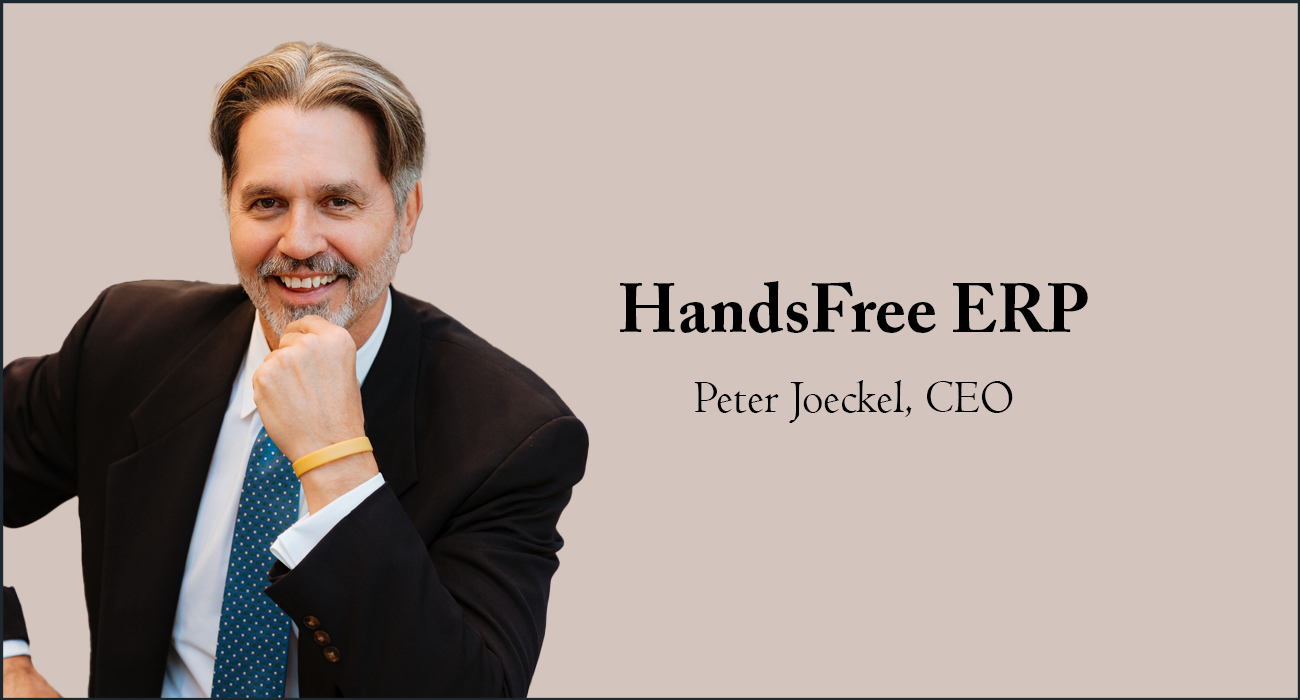
HandsFree ERP was founded to give ERP buyers something the traditional implementation model often lacks: an independent voice on their side of the table. Most companies implement ERP infrequently, while vendors and implementation partners work with these systems every day. HandsFree ERP closes that knowledge gap by helping organizations define requirements, challenge assumptions, identify risks, and make critical decisions before they become costly problems. Its role is to prepare customers to enter ERP projects with greater clarity, stronger foundations, and meaningful control.
The company’s mission extends beyond consulting to changing how organizations approach ERP investment and implementation. Its upcoming book, ERP on the Brink: How Partners Kill Good ERP Software, challenges the idea that failed ERP projects are primarily a software problem, highlighting weak preparation, poor data strategies, unclear responsibilities, outdated implementation practices, and decisions made without sufficient evidence. HandsFree ERP is building a stronger customer-side discipline around ERP, helping businesses become smarter buyers and create better conditions for successful implementations.
Inside the Vision of Peter Joeckel
Could you provide an overview of HandsFree ERP’s core services and solutions, and explain how they help businesses make informed ERP decisions?
HandsFree ERP operates across three interconnected areas: ERP, Data, and AI. Our ERP Discover process rapidly captures and prioritizes business requirements, evaluates ERP fit, identifies gaps, creates demo scenarios, and develops realistic budget and timeline expectations. Our Data services help organizations evaluate data quality, migration complexity, governance, integrations, and reporting before implementation. Our AI Agent Opportunity Assessment identifies business processes where AI and automation can create measurable value while considering feasibility, data readiness, and risk. We also support ERP selection, implementation readiness, project rescue, stabilization, optimization, and executive education. The common objective is simple: data-driven decisions, faster clarity, and lower risk.
How does HandsFree ERP work with clients throughout an ERP project, and how does its client-side approach help build trust and achieve better business outcomes?
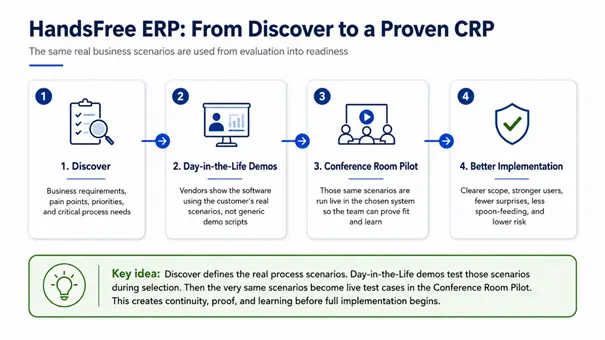
A fundamental challenge is that the customer may only go through a major ERP transformation once every 10 or 15 years, while the software vendors and implementation partners do this every day. That experience gap means customers can easily become dependent on the parties selling and implementing the solution. The HandsFree ERP Success Framework is designed to close that gap. We give the customer a structured methodology, independent expertise, and objective evidence so they can actively lead the project rather than simply being led through someone else's implementation methodology. The process starts with thorough business requirements gathering through Discover. But requirements should never become a document that gets completed, filed away, and forgotten. We turn the most important requirements into business-critical scenarios that follow the company through every stage of the ERP journey. Those same real-world scenarios are used during Day-in-the-Life software demonstrations to test how each ERP actually supports the business. Once a solution is selected, the scenarios become live test cases in the Conference Room Pilot, where the client can prove the software, processes, data, and integrations before full implementation begins. The business requirements gathered at the beginning remain connected to software selection, implementation planning, testing, training, and ultimately the business outcomes expected from the ERP investment. We are focused on making sure the client is prepared, the scope is understood, critical risks are exposed early, and the implementation partner receives a better-prepared customer with clearer expectations. The result is stronger internal ownership, fewer surprises, less spoon-feeding during implementation, and a much greater likelihood that the ERP delivers the business value originally intended.
How do your ERP selection, rescue, stabilization, post-go-live optimization, and AI readiness services address the different challenges businesses face throughout the ERP lifecycle?
ERP problems change throughout the lifecycle, so the solution cannot be one-size-fits-all. For organizations selecting ERP, we establish requirements and objectively compare solutions. For challenged implementations, we determine what is actually failing: software fit, implementation approach, and partner fit, data, integrations, governance, resources, testing, or decision-making. For stabilization and post-go-live optimization, we identify where the organization is still relying on workarounds, spreadsheets, manual processes, or underused functionality. For organizations considering AI, we look beyond the excitement surrounding AI agents. We identify specific processes where automation can create value and determine whether the underlying data and business processes are ready. The objective is always measurable business improvement rather than technology for technology's sake.
What makes HandsFree ERP different from ERP vendors and implementation partners, particularly in terms of independence, technology, experience, and fact-based recommendations?
Our independence is the fundamental difference. Software vendors and implementation partners play essential roles, but they are not independent. Software companies are compensated for selling licenses, and implementation partners are compensated for implementation services and consulting hours. The customer is different. They may only make an ERP decision once in a decade, yet they are expected to negotiate and make critical decisions with organizations that do this every day.
HandsFree ERP balances that equation.
We represent the buyer. Our job is not to sell more software, more customization, or more consulting. Our job is to make sure the customer understands what they are buying, what they need, what could go wrong, and what must be proven before they commit.
How does HandsFree ERP use its proprietary tools and technology to help clients assess ERP requirements, data quality, AI readiness, and implementation risks?
Technology allows us to dramatically accelerate work that traditionally required weeks or months of consulting interviews. Our Discover methodology can capture hundreds of detailed business requirements, prioritize them, evaluate ERP fit, identify gaps, and generate structured scenarios for software demonstrations. For data, we use technology to evaluate migration, quality, governance, integration, and reporting requirements before those issues become expensive implementation surprises. Our AI assessment methodology evaluates processes based on business value, automation potential, feasibility, data readiness, and risk. We are also expanding the concept into an ERP "control tower" approach where executives can gain ongoing visibility into project health, data, integrations, testing, and business readiness. For end-to-end project management, from requirements and fit-gap assessments to selection, proof, actual implementation, and go-live, we use our ERP Success Framework to manage risk tightly. Technology does not replace consulting judgment. It gives experienced advisors better evidence.
What measurable outcomes should clients expect from working with HandsFree ERP, and how do you help ensure ERP investments translate into long-term business value?
Activities that historically required months can often be compressed dramatically. Clients can establish detailed requirements, software fit, risks, budget ranges, and implementation expectations before committing to a major project. The second outcome is risk reduction. Discovering a major data, integration, reporting, or functional gap before implementation is considerably less expensive than discovering it six months into the project. The third is financial discipline. ERP investments can run into millions of dollars. Better preparation reduces unnecessary customization, consulting effort, delays, rework, and business disruption. Ultimately, success is not measured by whether software goes live. It is measured by whether the organization achieves the business outcomes that justified the investment.
What future innovations and strategic initiatives will shape HandsFree ERP’s growth as ERP, AI, automation, and data-driven business processes continue to evolve?
We see ERP, data, automation, and AI converging. The next generation of business operations will increasingly involve AI agents, automated workflows, integrated data platforms, and continuous intelligence. HandsFree ERP is expanding from point-in-time ERP advisory toward continuous business-system health and decision support. That includes ERP health assessments, data quality monitoring, AI readiness, process optimization, executive education, and greater use of technology to identify risks before they become project failures.
Short Bio - Peter Joeckel, CEO
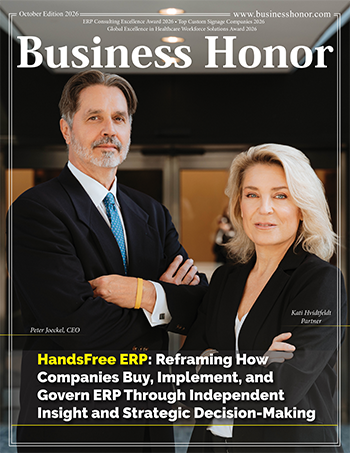
Peter Joeckel, CEO of HandsFree ERP, is a longtime ERP industry executive and advocate for changing how organizations purchase and implement enterprise software. His experience spans decades of ERP projects, from rescue projects to brand-new ones, software ecosystems, implementation partners, and customer transformations. That experience led to a central realization behind HandsFree ERP: technology has advanced faster than the traditional ERP implementation model. Together with COO and Partner Kati Hvidtfeldt, who brings approximately 30 years of ERP and software industry experience, including 17 years at Microsoft, the HandsFree ERP leadership team combines deep industry knowledge with a strongly customer-side perspective. The solutioning and best practices from developing solutions provide added insights to customers’ ERP projects that manage customers’ risk at a totally different level. Their shared mission is straightforward: help companies become smarter ERP buyers, reduce unnecessary risk, and turn technology investments into measurable business value.



























.webp)
.webp)

.webp)