Friday, October 16, 2026
Global Business Excellence Awards 2026
Business Honor
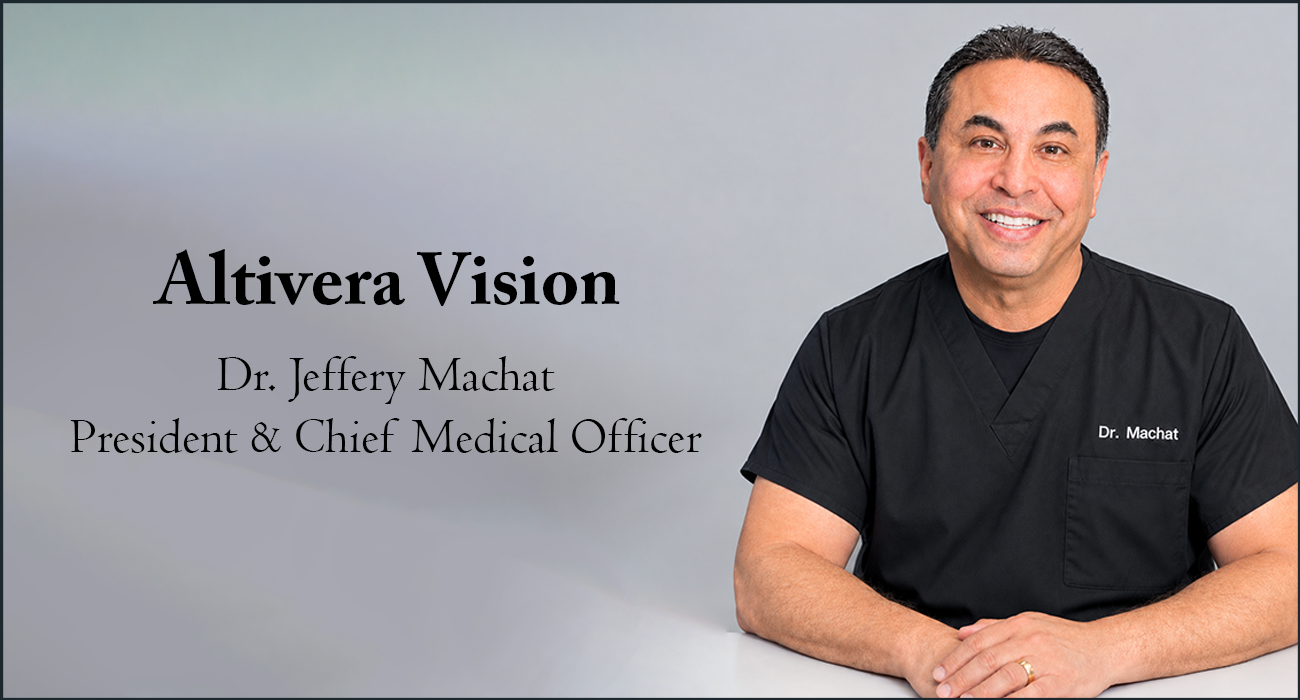 Altivera Vision is a growth intelligence company built for ophthalmic practices. By connecting marketing, patient consultations, scheduling, and procedure delivery, Altivera Vision turns fragmented patient-journey data into actionable intelligence-helping practices reach the right patients, uncover missed opportunities, improve consultation-to-procedure conversion, and make better use of available capacity.
Built around the physician and patient, Altivera Vision closes the operational gaps that emerge when marketing, front-office, and clinical teams work from disconnected systems. Through its connection to RAD Intel, the parent company, Altivera Vision brings advanced intelligence, marketing technology, and proven growth capabilities into vision care, creating a more integrated operating model designed around how modern practices actually operate.
The result is a clearer view of demand, patient drop-off, and the available capacity that could support additional growth. Altivera Vision helps practices improve performance, serve more patients, and capture more of the opportunity already within their business—while physicians remain firmly in control of care.
“You cannot manufacture a great surgeon. But you can build a system that allows that surgeon, the team, and the practice to perform at their full potential. That is what we are building at Altivera Vision.” Dr. Jeffery Machat, President and Chief Medical Officer, Altivera Vision
Many platforms offer analytics or execution tools. Where does Altivera Vision focus, and what gap does it close that existing solutions leave unresolved?
We focus on generating patient demand and getting the right patient to the right surgeon at the right time.
Most practices already have technology. They have marketing platforms, scheduling software, practice management systems, and reporting. The opportunity is making those systems and teams work together around a common understanding of the patient.
Altivera Vision connects patient acquisition, consultation, follow-up, and scheduling so the intelligence generated at one point in the journey can improve what happens next.
That matters because growth depends on both the demand a practice creates and how effectively that demand moves through the entire system.
How does Altivera Vision approach developing, testing, and scaling new capabilities within its platform?
We build inside real vision practices.
That gives us something a traditional software development environment can't replicate: actual patients, consultations, schedules, capacity constraints, and measurable outcomes.
When we introduce a new capability, we can see how it performs within the day-to-day reality of a practice. We can understand how patients respond, identify friction or areas where teams need more support, and determine whether the change ultimately improves performance.
What proves effective can then become part of the broader system. The goal is to take what works and make it repeatable, so every practice doesn't have to solve the same problem independently.
When a team starts using Altivera Vision, what’s the first thing that changes in how they work?
They gain greater clarity around what should happen next. The problem is that expertise can be difficult to repeat across an organization.
Altivera Vision helps turn those successful behaviors into a more consistent system. Teams have greater visibility into which patients need attention, how opportunities should be prioritized, how follow-up should happen, and where capacity can be used more effectively.
The practice becomes less dependent on individual variability while still preserving the human relationships that make excellent care possible.
Where does Altivera Vision create the most impact within a practice, and why there?
One of the greatest opportunities exists between patient interest and the procedure itself.
Practices understandably spend significant time and money generating demand. But generating another lead isn't always the most valuable next move. There may already be substantial opportunity sitting inside the practice.
A prospective patient may have raised their hand but never booked a consultation. Another may have completed a consultation but delayed making a decision. A qualified surgical candidate may simply need the right information or follow-up at the right time. At the same time, a surgeon may have procedure capacity that isn't being fully utilized.
Small improvements across those moments can have an outsized effect on performance because the practice is creating more value from demand it has already earned.
Altivera Vision connects acquisition, consultation, follow-up, and scheduling so more of the right patients successfully make it through that journey and ultimately reach the surgeon.
Where do you rely on automation within Altivera Vision, and where is human judgment still critical to ensuring quality outcomes?
We use automation where it can make the patient journey more consistent and help teams respond with greater precision.
That can include understanding patient intent, prioritizing opportunities, informing follow-up, supporting patient communication, and helping teams make better use of scheduling and procedure capacity.
But vision care is deeply human.
A patient considering LASIK or cataract surgery may have questions, concerns, and very personal reasons for making the decision. Their interactions with the counselor and physician, along with the trust they develop in the practice, can influence whether they feel comfortable moving forward.
Clinical evaluation and treatment decisions belong with the physician. The relationship with the patient remains with the practice.
Our role is to make the system surrounding those interactions smarter, so highly trained people can spend more of their time where their expertise has the greatest value.
How do you see Altivera Vision evolving as the demand for more precise and efficient decision-making continues to grow?
A published U.S. ophthalmology workforce projection found that between 2020 and 2035, demand is expected to increase 24% while ophthalmologist supply is projected to decline 12%. By 2035, the study projects workforce adequacy at approximately 70%.
Practices need to make better use of the capacity, teams, and patient relationships they already have. They need to identify the right opportunities earlier, reduce leakage through the patient journey, and make every clinical hour more productive without compromising care.
That's where Altivera Vision will continue to evolve. As the system learns from acquisition, consultation, scheduling, and operational performance, it can become increasingly precise about what moves patients forward and help practices apply those learnings at scale.
The goal is a practice that can grow intelligently around its physicians rather than asking those physicians to simply do more.
What is one capability or principle behind Altivera Vision that isn’t immediately visible but is critical to how the platform performs?
The ability to make what works repeatable. The best practices contain enormous amounts of industry expertise and hands-on knowledge that could never appear in a database. It lives in the counselor who knows how to explain a procedure beautifully, the marketing program that consistently attracts qualified patients, the scheduling approach that keeps a surgeon's time productive, or the physician whose patient experience creates extraordinary trust.
Altivera Vision is designed to turn more of that knowledge into something the broader system can learn from. When we understand why a particular approach produces better outcomes, that intelligence can inform decisions elsewhere across the patient journey and, over time, across practices.
Each practice can retain the physicians, teams, reputation, and patient relationships that make it exceptional while benefiting from a larger system that is continually learning how to perform better.
Short Bio - Dr. Jeffery Machat, President and Chief Medical Officer
Dr. Jeffery Machat is President and Chief Medical Officer of Altivera Vision and one of the original pioneers of modern laser vision correction.
He founded TLC Laser Eye Centers and helped build it into one of North America's most recognized refractive surgery platforms. Over the course of his 35+ year career, he has performed more than 110,000 LASIK procedures, trained more than 3,000 surgeons around the world, and helped develop and scale approximately 150 clinics across Canada, the United States, and Europe.
That combination of clinical and practice-building experience is central to Altivera Vision.
Dr. Machat understands what exceptional vision care looks like at the level of the individual patient and what it takes to reproduce that excellence across a growing organization. At Altivera Vision, he is bringing that experience together with RAD Intel's AI-driven intelligence and growth capabilities to build the systems surrounding the physician.
The ambition is straightforward: help exceptional vision practices reach more of the right patients, convert more of the demand they've already earned, use clinical capacity more effectively, and grow while protecting the quality of care and physician relationships that made them exceptional in the first place.




























.webp)

.webp)



.webp)