Thursday, November 05, 2026
Business Honor
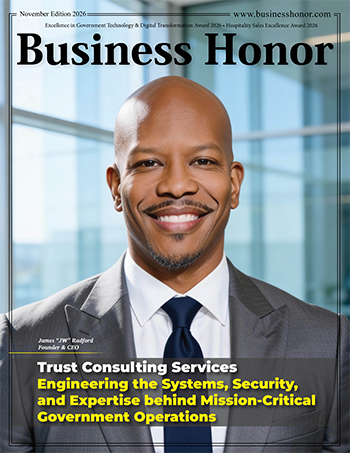
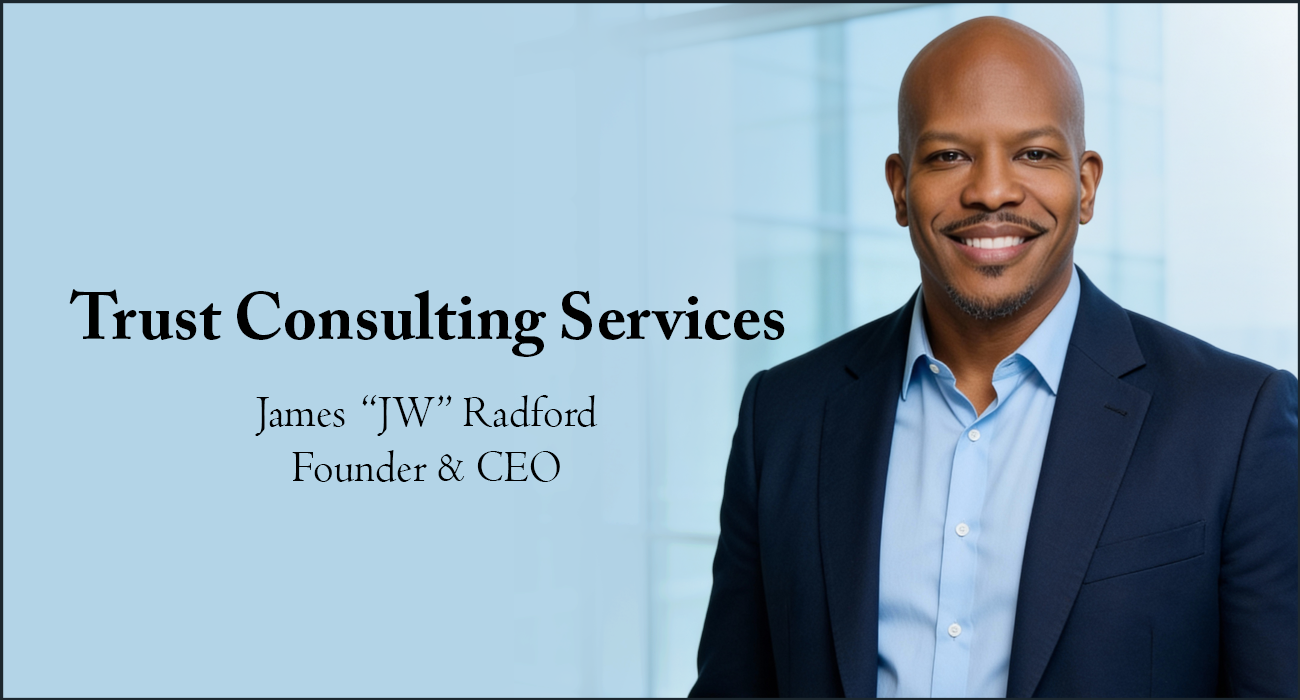 In mission-critical work, trust is not just a value. It is the foundation that determines whether commitments are delivered when they matter most. This belief has shaped Trust Consulting Services since its founding in 2015, when the company set out to build a business defined by accountability, responsiveness, discipline, and results. Its founder’s experience as an Air Force Contracting Officer provided a firsthand understanding of government clients and the standards they expect from their contractors.
Over the years, Trust has evolved alongside its clients' increasingly complex demands. What began as a professional services company has expanded into technology, cybersecurity, artificial intelligence, physical security, intelligence, and mission support. This broader capability allows the company to address complex challenges while staying focused on the people, organizations, and missions it serves.
Today, Trust is pursuing a larger vision: to engineer the future as the most trusted partner in mission-critical technology solutions. Its growth has created employment opportunities, expanded into new markets, and brought national recognition for its growth and performance. Yet the company looks beyond contracts and awards to define its identity. Guided by “Lead with Integrity. Serve with Purpose. Excel Relentlessly,” Trust is building its next chapter around one clear direction: The Future, Engineered.
Could you give us an overview of Trust Consulting Services’ core services and the key business challenges they help clients address?
Trust operates at the intersection of technology, security, intelligence, and professional services.
Our technology capabilities include artificial intelligence, machine learning, cybersecurity, cloud, data analytics, digital transformation, application development, DevOps, and digital workforce solutions.
We complement those capabilities with physical security, program and project management, acquisition support, and other mission-critical professional services.
Our clients are often dealing with complex challenges: outdated technology, cybersecurity threats, inefficient processes, workforce limitations, physical security risks, and enormous amounts of data that are not being fully utilized.
Our focus is to help clients strengthen mission performance, improve operational efficiency, manage risk, and make better use of their technology and resources.
What makes Trust different from other providers?
Trust approaches each engagement with the view that fulfilling a requirement is only the starting point. The larger objective is to create meaningful value for the mission.
Technology, cybersecurity, physical security, intelligence, and operations are increasingly connected. We approach our clients' challenges from that broader perspective.
Our experience working with government organizations also gives us an understanding of the environments in which our solutions must operate.
Most importantly, we listen. We are not interested in forcing a predetermined solution on a client. We want to understand their mission, identify the problem, and build the right solution around it.
That creates a relationship where Trust becomes more than a vendor. We become a mission partner.
How do you assess a client’s specific requirements and develop solutions that align with its operational, security, and business goals?
Everything begins with listening.
Before we recommend technology, personnel, or a solution, we want to understand the client's mission, operating environment, risks, challenges, and desired outcomes.
Then we ask three fundamental questions: Where are you today? Where do you need to go? What is preventing you from getting there?
From there, our team identifies gaps and develops a solution that aligns people, processes, technology, and security with the client's objectives.
We also establish measurable performance indicators because a solution should ultimately produce results.
One principle I emphasize at Trust is: Don't sell clients what we have. Understand what they need.
How do your physical security and intelligence services help clients identify risks, strengthen preparedness, and make better-informed decisions?
Security should be proactive, not simply reactive.
Our physical security capabilities help organizations protect their people, facilities, infrastructure, information, and operations. But effective security also requires understanding the environment around those assets.
That is where intelligence and analysis become extremely valuable.
By bringing security and intelligence together, organizations can better identify vulnerabilities, recognize emerging threats, improve preparedness, and make more informed decisions.
The objective is not simply to respond effectively after an incident occurs, but to help clients recognize potential problems earlier and strengthen their overall readiness.
How is Trust using AI, automation, cloud, and data analytics, and what role does EchoHostAI play?
AI represents one of the biggest transformations in business since the internet, and Trust intends to be part of that transformation.
We are integrating AI, automation, cloud technologies, and data analytics into both our client solutions and our own internal operations. The goal is to automate repetitive work, improve decision-making, increase operational visibility, and allow people to concentrate on higher-value activities.
EchoHostAI is part of that broader strategy. It reflects our belief that AI must solve real business problems, not simply be technology for technology's sake.
I believe the next generation of successful organizations will do more than adopt AI. They will redesign how work gets done around AI.
How do you maintain service quality while continuing to grow?
For Trust, scaling the business cannot come at the expense of accountability or client service.
As Trust expands, we are investing heavily in program management, quality control, leadership accountability, technology, employee development, and customer engagement.
We are also becoming much more data-driven. Leadership needs visibility into contract performance, customer satisfaction, staffing, financial performance, operational risks, and employee performance.
Technology can provide that visibility, but leadership still matters.
Clients need to know there is someone accountable for their mission. No matter how large Trust becomes, I never want us to lose that sense of ownership.
We should operate like every client is our most important client.
Where do you see Trust over the next three to five years?
I believe the next three to five years could represent the most significant growth period in Trust's history.
Our future will be increasingly technology-driven, particularly in AI, cybersecurity, cloud, data analytics, automation, digital transformation, and digital workforce solutions.
We also see tremendous opportunities supporting defense and national security missions where technology, cybersecurity, intelligence, and physical security converge.
We intend to leverage our contract vehicles, strategic partnerships, and government experience to compete for increasingly complex opportunities.
Our objective is clear: build Trust into a nationally recognized technology and mission-support company capable of solving some of government's most difficult challenges.
Short Bio - James Radford
James “JW” Radford is the Founder and CEO of Trust Consulting Services, which he established in 2015 after a career that included 12 years of service in the U.S. Air Force and experience as a Contracting Officer.
Radford built Trust by applying the discipline, accountability, acquisition expertise, and commitment to service developed throughout his military and government career. Trust has since expanded into technology, cybersecurity, artificial intelligence, physical security, and professional services supporting government missions.
Radford also holds an MBA and is a Project Management Professional, author, motivational speaker, entrepreneur, and host of the No Ceiling Podcast.
His leadership philosophy is rooted in resilience, personal accountability, service, and the belief that people and organizations frequently accomplish far more once they stop placing artificial ceilings on what is possible.




























.webp)
.webp)